
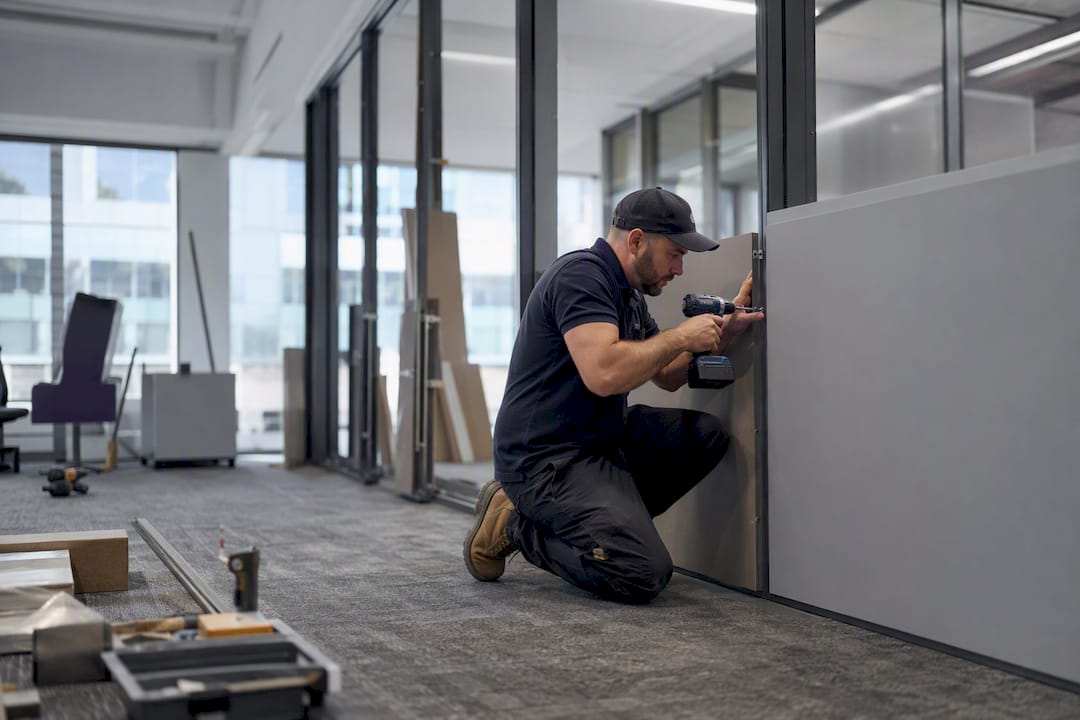
Appoint an experienced fit-out project manager, or a firm offering managed fit-out services, to secure a coordinated schedule, controlled budget and a clean handover. For most commercial fit-outs, pair an internal sponsor (someone with budget authority and decision-making power) with an external project manager who owns the day-to-day programme. That combination delivers three things you actually care about: a realistic timeline, cost certainty, and a handover package that doesn’t leave you chasing paperwork after move-in.
Before you sign anything, judge a proposal on two things:
- A detailed milestone schedule with named deliverables at each stage, not just a start and end date.
- A contingency band of roughly 10 to 15% built into the budget, with a stated process for approving changes.
TL;DR:
- Appoint an experienced external project manager paired with an internal sponsor to ensure a realistic timeline, cost certainty, and smooth handover documentation.
- Require a detailed milestone schedule with specific deliverables and incorporate a contingency of 10 to 15% for unforeseen costs, especially in MEP and FF&E works.
- Demand staged project outputs like drawings, certifications, and warranties at each phase, starting closeout preparations 60 to 90 days before practical completion.
- Use procurement routes with milestone payments, defect liabilities, and proof of on-time project completion, verified through recent contractor references.
- Choose an integrated fit-out partner capable of combining workplace strategy with construction delivery to minimize change orders and secure timely handovers.
Table of Contents
- What is fit-out project management and who’s responsible for what?
- What are the core stages of a fit-out project?
- Who needs to be involved, and how should you procure the work?
- How much contingency should you budget, and what drives cost overruns?
- What must be in your closeout and handover checklist?
- Does professional project management actually improve fit-out outcomes?
- Niche Projects: a direct option for managing your fit-out
- Key Takeaways
- Sources
What is fit-out project management and who’s responsible for what?
Fit-out project management is the discipline that turns a shell-and-core space (bare concrete, exposed services, no finishes) into a working office. According to Sprintlaw’s guide to fit-out works, that scope stretches from structured cabling and HVAC through to architectural finishes and furniture. It’s a distinct discipline from interior design and from ongoing facilities management. A designer draws the space; a facilities manager runs it once it’s occupied. The project manager owns everything in between.
Core responsibilities typically include:
- Scope control — locking down what’s included before pricing starts, so scope creep doesn’t quietly inflate the budget.
- Programme management — sequencing design, procurement and construction so trades aren’t waiting on each other.
- Cost management — tracking spend against budget and approving variations before they happen, not after.
- Compliance oversight — fire, accessibility, and building code sign-off, particularly relevant for category A fit-outs with heavier base-building work.
- Quality control and handover — inspecting works against spec and compiling closeout documentation.
If you have in-house facilities or property staff with fit-out experience, you might run smaller projects internally. For anything involving multiple trades, a live occupied site, or a deadline you can’t move, external PM capability earns its fee quickly.
What are the core stages of a fit-out project?
A typical office fit-out runs through six stages, and each one has deliverables you should demand before signing off and moving to the next.
- Brief and feasibility — the sponsor defines headcount, budget ceiling and target move-in date; the output is a written brief and a feasibility study confirming the space can physically deliver it.
- Design — concept design, then detailed design; deliverables are drawings, a finishes schedule and a firm cost plan.
- Procurement — tendering or negotiating with contractors; deliverable is a signed contract with a priced schedule of works.
- Construction (first and second fix) — first fix covers services behind walls and ceilings; second fix is finishes, joinery and fit-off; deliverables are weekly progress reports against programme.
- Commissioning — testing HVAC, fire systems, lighting controls and AV; deliverables are test certificates and commissioning reports.
- Snagging and handover — a joint inspection produces a defects list (the “snag list”), which the contractor closes out before final handover.
Timelines vary with scope, but a standard office fit-out of a few hundred square metres, Santos Knight Frank notes, depends heavily on early coordination between procurement and design to avoid blowing out the schedule. Typical timings for design, procurement, construction, commissioning and snagging vary widely depending on scope and base-building work, which is exactly the window most owners underestimate when they set a move-in date.
Who needs to be involved, and how should you procure the work?
A fit-out touches more stakeholders than most owners expect at the outset. The core group includes:
- The project sponsor, who holds budget authority and makes final calls on trade-offs.
- Department representatives, who validate that the design actually supports how teams work.
- The project manager, coordinating design, construction and compliance.
- The designer or architect, translating brief into drawings.
- The contractor, delivering the physical works.
- IT and security, who need lead time for cabling, access control and network cutover.
- Facilities management, who inherit the space and need input on maintainability.
Procurement route matters as much as the people. Design-bid-build (design fully documented before pricing) gives cost certainty but takes longer. Design-and-construct hands one party responsibility for both design and delivery, which speeds things up but reduces your control over detail. Staged packages, where you procure long-lead items separately from the main works, sit between the two and suit tighter timelines. Panel arrangements, where you pre-qualify a shortlist of contractors, work well if you run fit-outs repeatedly across multiple sites.
Whichever route you choose, insist on milestone payments tied to deliverables, a defined defect liability period, and either liquidated damages or a retention clause for late completion.

Pro Tip: Ask every shortlisted contractor for evidence of on-time handover from their last three projects, not just a reference list. A contractor who can produce actual completion dates against contracted dates tells you more than any testimonial.
How much contingency should you budget, and what drives cost overruns?
Structure your budget in three layers: a base scope estimate, a contingency allowance, and a separate change allowance for scope you haven’t finalised yet. For a standard office fit-out, a contingency of a moderate percentage of the base construction cost is a sensible working range, held back specifically for the unknowns that surface once walls open up and services get exposed.
The cost drivers that blow past that contingency most often are:
- Specification upgrades made mid-project (better finishes, premium furniture) without revisiting the budget.
- Mechanical, electrical and plumbing (MEP) works, which are the hardest to price accurately before demolition reveals what’s actually behind the walls.
- FF&E (furniture, fixtures and equipment) ordered late, forcing rush freight or substitute products.
- Compliance work uncovered during construction, such as fire-rating upgrades the base building didn’t anticipate.
On schedule, the biggest risks are permit delays, long-lead items (specialist HVAC plant, custom joinery, AV equipment), and constraints from operating in a live, occupied building. Early procurement of long-lead items meaningfully cuts this risk, and platforms like WorkSavi exist specifically to track resourcing and commissioning milestones across complex or multi-site programmes. Phasing the works and shifting noisy trades to out-of-hours shifts are the two most reliable mitigations when you’re fitting out around a live tenancy, a challenge covered in more depth in managing fit-outs in occupied environments.
What must be in your closeout and handover checklist?
Start compiling closeout documentation 60 to 90 days before practical completion, not after. MASTT’s handover guidance is blunt about this: leaving it until the final week guarantees delays to occupancy. Track these deliverables weekly against the programme, the same way you’d track construction milestones.
- As-built drawings reflecting what was actually built, not what was originally designed.
- Operations and maintenance (O&M) manuals for every mechanical and electrical system installed.
- Warranties and compliance certificates, including fire and accessibility sign-off.
- Commissioning reports proving systems were tested and performed to spec.
- A closed-out punch list with no outstanding defects.
- Staff training records for building management systems and any specialist equipment.
| Deliverable | When to compile |
|---|---|
| As-built drawings | Progressively during construction, finalised by practical completion |
| O&M manuals | Collected from each subcontractor as their works are commissioned |
| Compliance certificates | Issued at commissioning, verified before occupancy |
| Punch list closeout | Inspected 2 to 3 weeks before handover, closed before final payment |
A phased handover, occupying part of the floor while snagging continues elsewhere, protects your move-in date without forcing a full stop on outstanding works.
Does professional project management actually improve fit-out outcomes?
Fit-out project management works best when the person running it understands both construction sequencing and how the finished space needs to function day to day. That’s the gap Niche Projects was built to close: combining workplace strategy with construction delivery so the built outcome supports how the business actually operates, not just how it looks on the drawings. Projects run this way tend to see fewer late-stage change orders, because the design was tested against real workflow before construction started, and handovers land closer to the planned date because commissioning and snagging were tracked as scheduled milestones from early on rather than an afterthought.
When you’re evaluating any supplier’s proposal, ask for:
- A sample programme showing named milestones, not just phase blocks.
- Case studies with before-and-after floor plans and stated outcomes.
- CVs of the actual people who’ll run your project, not the company’s senior leadership.
- A described snagging process and a sample handover package from a past project.
Pro Tip: If a proposal can’t show you a real commissioning report or handover checklist from a previous job, that’s a gap worth asking about before you sign, not after.
Niche Projects: a direct option for managing your fit-out
You’ve now got the framework: stages, procurement routes, contingency bands, and the handover deliverables to insist on. Niche Projects delivers exactly that, as one integrated service rather than a design firm and a separate construction manager you have to coordinate yourself. We combine workplace strategy, space planning and construction management, which means the person managing your programme also understands why the space needs to work the way it does for your team, not just how to sequence trades.
When you request a proposal, ask us for the same things this playbook covers: a named milestone schedule, contingency assumptions, references from comparable projects, and a clear description of our handover package. If ergonomics, layout, or how the space supports your team’s daily work is part of the brief, our ergonomic office design approach is a good place to see how we think about that from day one. Get in touch to talk through your project and request a proposal built around your timeline and budget.
Key Takeaways
Successful fit-out project management depends on appointing clear ownership, requiring milestone-based deliverables at every stage, and starting closeout documentation 60 to 90 days before completion.
| Point | Details |
|---|---|
| Appoint clear ownership | Pair an internal sponsor with an external project manager or fit-out company for coordinated delivery. |
| Budget with contingency | Hold 10 to 15% contingency on top of the base construction estimate for unforeseen works. |
| Demand staged deliverables | Require drawings, test certificates and compliance sign-off at each project stage before proceeding. |
| Start closeout early | Begin compiling as-built drawings, O&M manuals and warranties 60 to 90 days before practical completion. |
| Choose an integrated delivery partner | Niche Projects combines workplace strategy and construction management to reduce change orders and protect handover dates. |
Sources
- Fit-out works legal guide for office and retail fitouts in Australia | Sprintlaw
- Project management in office fit outs | Santos Knight Frank
- Construction project handover checklist | MASTT