
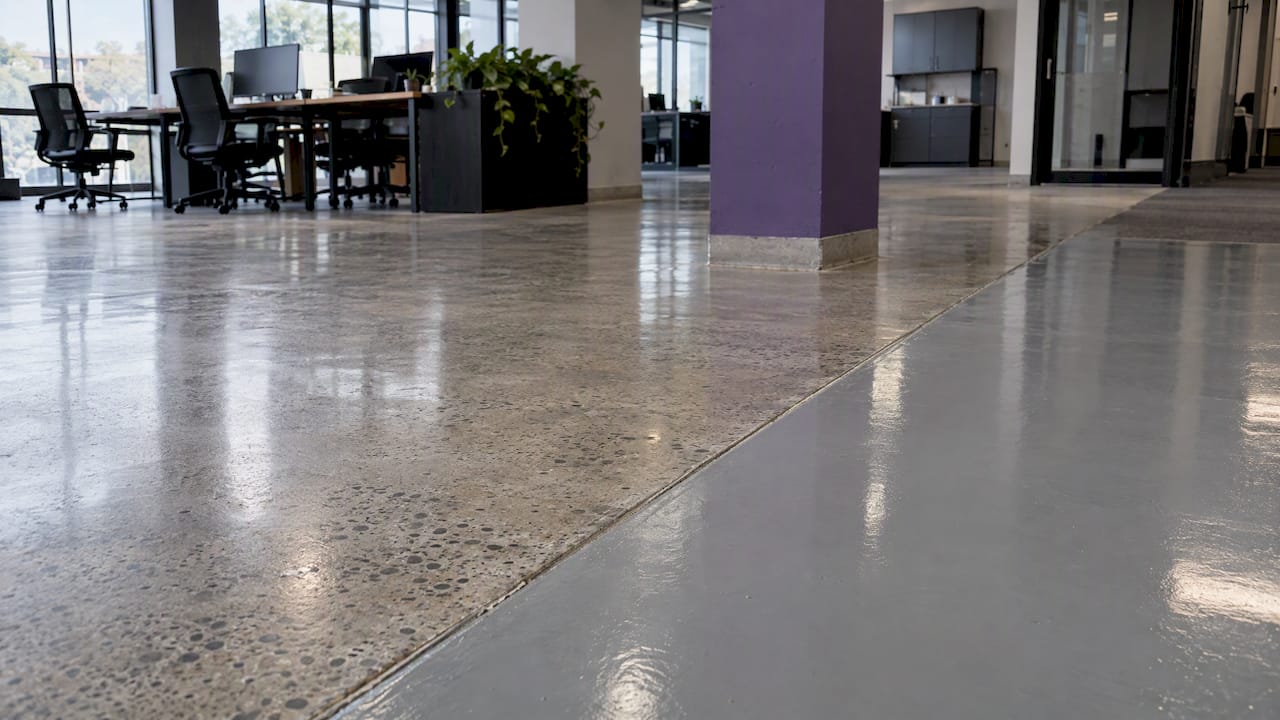
Polished concrete is the better pick when you want the slab itself as a long-wearing, low-maintenance surface with a natural stone look. Epoxy is the better pick when you need controlled colour, oil and chemical resistance, and a coating you can recoat later. The main trade-offs are cost, moisture sensitivity and how each one is repaired.
TL;DR:
- Australian commercial pricing puts epoxy at about $30–$90 per m² and polished concrete at $50–$150 per m², before slab repairs or special finishes.
- Choose epoxy for expected oil or chemical spills, branded colours, or patterns, but confirm slab moisture and pH before installation to reduce delamination risk.
- Polished concrete suits heavy foot traffic and a natural stone appearance; it tolerates trapped vapour better than epoxy, though moisture testing still helps.
- Epoxy damage can be patched or recoated, while polished concrete requires regrinding; spot repairs can be quicker, but broader wear can require a full recoat.
Table of Contents
- How polishing and epoxy coating actually differ
- What each floor costs and how long it takes
- Durability, wear and repair paths
- Appearance and customisation: what you can achieve
- Maintenance and lifespan: cleaning, rework and lifecycle costs
- Installation and slab preparation: what installers should do
- Five questions to choose between epoxy and polished concrete
- Ready to choose a floor finish for your project?
- FAQ
- Sources
How polishing and epoxy coating actually differ
The flooring institute guide describes the split clearly: polished concrete is the existing slab, mechanically ground and treated with a densifier, so the wearing surface is the concrete itself. Epoxy is a resin that you mix, spread and let cure into a continuous film over the slab. That one difference drives almost everything else.
- Polished concrete wears by slow abrasion of the slab, so scuffs and dulling are repaired by grinding again.
- Epoxy can chip, bubble or delaminate if the bond to the slab fails, and it is repaired by patching or recoating.
- Moisture: coatings are the more vulnerable system to trapped vapour and slab pH, so testing before application matters. Polished concrete copes better with trapped vapour but still benefits from testing.
- Surface depth: a polished floor has no layer to peel, while an epoxy floor has a film that must stay bonded for its whole life.
In practice, polished concrete fails gradually and predictably. Epoxy tends to fail locally, at a poorly prepared patch or a damp corner, and the rest of the floor stays fine.
What each floor costs and how long it takes
Budgeting starts with realistic bands. Published Australian commercial pricing puts epoxy floor coating systems at roughly $30–$90 per m² and polished concrete (grind and seal) at roughly $50–$150 per m², supply and install, according to this commercial flooring cost guide. Anti-slip or anti-static requirements push both higher.
Cost drivers worth checking before you accept a quote:
- Slab condition, including cracks, old coatings and uneven areas.
- Moisture control, if testing shows the slab needs remediation.
- Access, and whether work must happen after hours.
- Removal of the old floor, which often adds more to cost and schedule than laying the new one.
Typical timeline stages:
- Preparation and repairs.
- Grinding (polished concrete) or primer (epoxy).
- Polishing steps or coating layers.
- Cure and recoat windows, then return to service.
Prep and cure windows usually decide the schedule, so ask for those dates, not just the laying days. If the floor is part of a wider project, our office refurbishment cost guide shows how flooring sits within a full budget and contingency.
Durability, wear and repair paths
Both finishes suit hard use, but they behave differently under it.
- Abrasion and foot traffic: polished concrete holds up well in busy corridors, shops and living spaces because the surface is dense concrete, not a film.
- Oil and chemicals: epoxy is the usual choice in garages, workshops and warehouses where spills are expected, because the resin seals the surface.
- Point loads and forklifts: both can work, but epoxy needs the right thickness and a sound bond, and polished concrete depends on the slab’s own strength.
- Repair of polished concrete: patch the damage, then re-grind and re-polish the affected area to blend it in.
- Repair of epoxy: patch, sand and recoat the damaged section, or recoat the whole floor when wear is widespread.
The key warning is on the coating side. Epoxy laid over a slab that was not tested or prepared for moisture can delaminate, and a delaminated floor is a recoat job, not a touch-up. Polished concrete does not have that failure mode, which is one reason it suits long-life installations.
Appearance and customisation: what you can achieve
Polished concrete looks like honed stone. You choose how much aggregate shows, from a light cream finish to a full exposed-stone look, and you can add stains or dyes for tone. Gloss ranges from a soft satin to a mirror shine, and the result always reads as concrete, with natural variation across the floor.
Epoxy gives you far more control over colour and pattern:
- Solid colours in almost any shade, useful for branding or zoning.
- Decorative flakes for a speckled, forgiving surface.
- Metallic effects for a swirled, high-end look.
- Clear or coloured topcoats, with non-slip additives where needed.
Sheen and texture affect safety as well as looks. A high-gloss floor of either type is slipperier when wet, so entries, wet areas and ramps usually call for a satin finish or an anti-slip additive, which also makes cleaning a little harder. Match the finish to how the space will actually be used, not just how it looks in a sample.
Maintenance and lifespan: cleaning, rework and lifecycle costs
Day-to-day care is simple for both. Sweep or dust mop, then damp mop with a neutral cleaner. Polished concrete resists staining once sealed, but acids and some spills can etch it. Epoxy shrugs off most spills, though harsh scrubbing pads can dull the topcoat.
- Polished concrete: re-polish when the sheen fades in high-traffic paths, often in sections.
- Epoxy: recoat when the topcoat wears through or the colour layer is scratched.
- Downtime: epoxy spot repairs can be quick, while a full re-grind is a bigger disruption.
- Lifecycle cost: a higher upfront polished price can balance out if the floor needs only light rework, while a cheaper epoxy suits spaces you expect to refresh.
Pro Tip: Ask your installer for a written maintenance schedule and the expected rework interval for your traffic level, so lifecycle costs are in the quote, not a surprise later.
If a floor sits inside a larger facility, our facility maintenance team handles floor finishes as part of ongoing works.
Installation and slab preparation: what installers should do
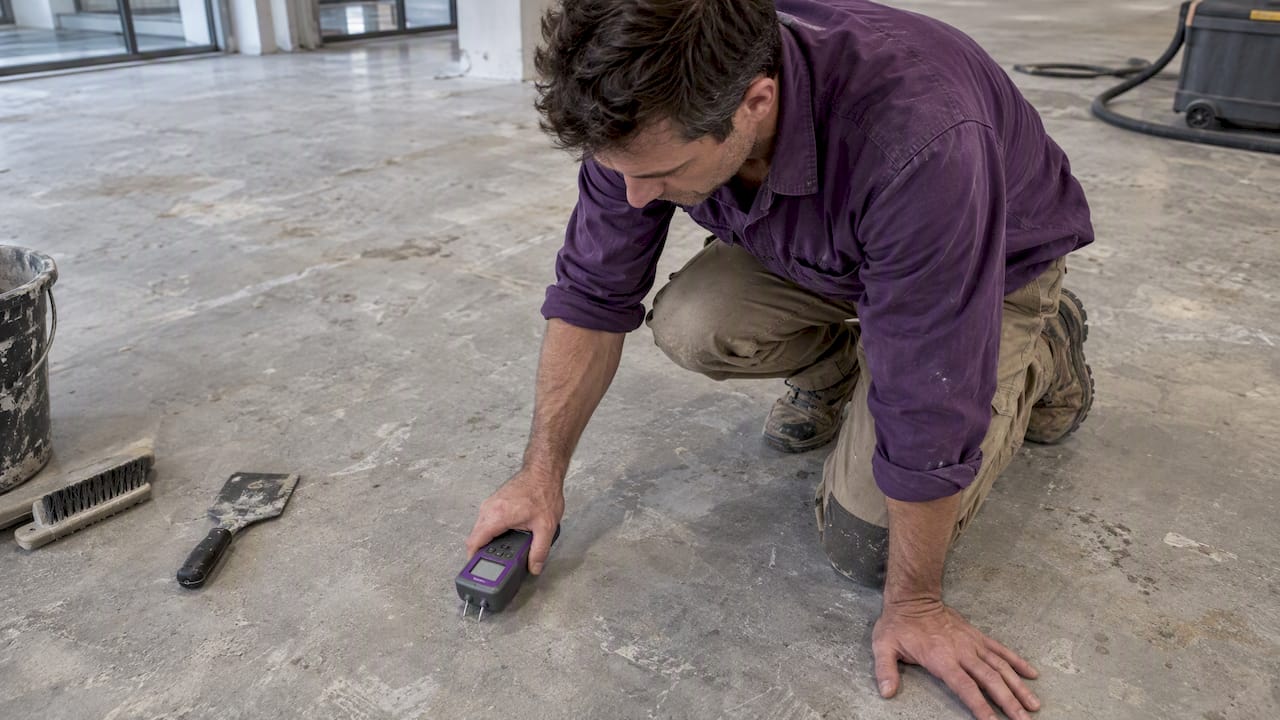
Preparation decides whether either finish lasts. Two moisture tests are standard before coatings go on: in-situ relative-humidity testing to ASTM F2170, and the older calcium-chloride method. Both tell you whether vapour is moving through the slab.
What to expect from a careful installer:
- Test slab moisture and check pH before choosing the system.
- Repair cracks and fill joints and holes.
- Grind the surface to open it up and remove old coatings or contaminants.
- Level low spots where the finish needs a flat plane.
- Apply a densifier (polished concrete) or primer (epoxy).
As the Flooring Institute guide notes, moisture and slab pH testing are important before coatings, and polished concrete is comparatively less vulnerable to trapped vapour but still benefits from testing. Skipped prep is the common cause of bubbling and delamination in epoxy, so insist on written test results, not a verbal assurance. Our guide to choosing office floor finishes covers how to brief an installer.
Five questions to choose between epoxy and polished concrete
Answer these in order and the right finish usually becomes obvious.
- What will the floor face? Oil, chemicals or forklift traffic point to epoxy; heavy foot traffic and a premium look point to polished concrete.
- How risky is the moisture? If testing is poor, decide whether you will pay for slab remediation. Polished concrete is the more forgiving option if you will not.
- How much do you care about colour? Branded colours, patterns or flakes favour epoxy; a natural stone look favours polished concrete.
- Can you accept periodic rework? Epoxy recoats every so often; polished concrete re-grinds less often but in bigger jobs.
- What are your budget and disruption window? Compare the cost bands above with how long the space can be out of use.
If your answers split evenly, talk to someone who installs both. Our floor finishes: concrete overview is a good starting point for comparing concrete-based options.
Ready to choose a floor finish for your project?
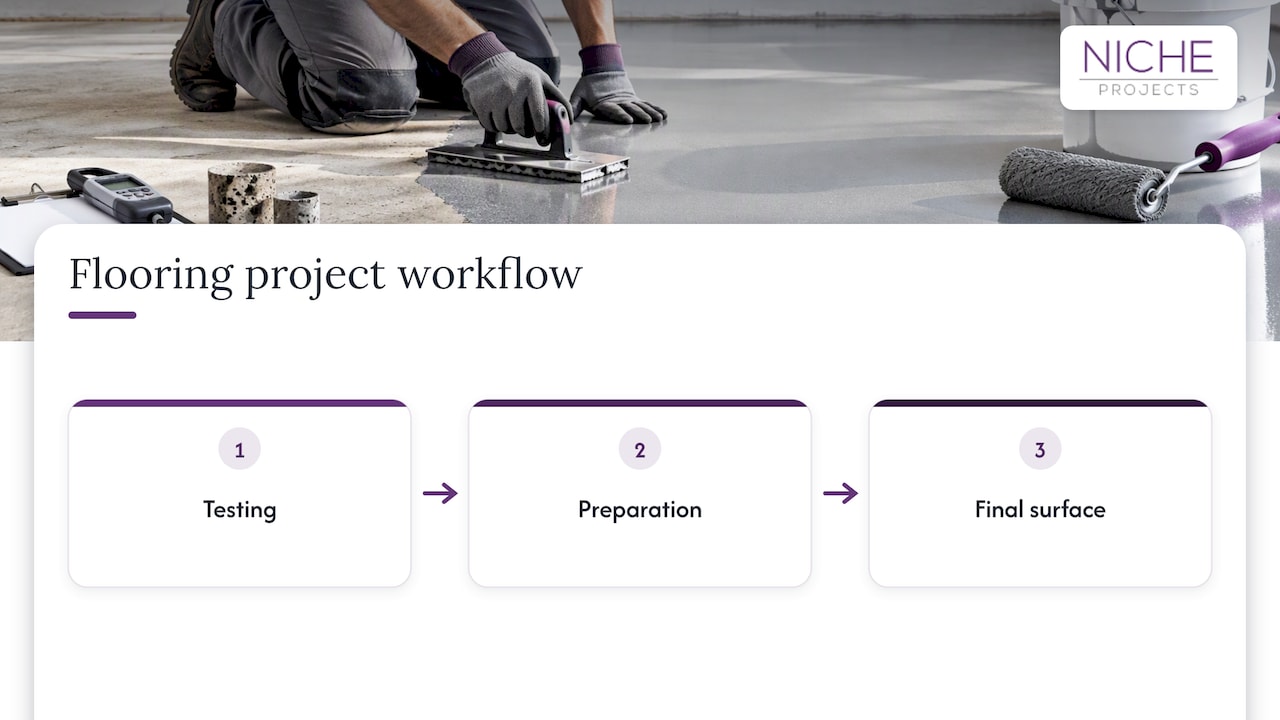
We deliver floor finishes as part of office fitouts, refurbishments and facility works, so the finish, the slab preparation and the schedule are planned together, not handed between trades. That means we coordinate the work from testing and preparation through to the final surface. Tell us about your space and we will help you weigh epoxy against polished concrete for your traffic, budget and timeline. Talk to us about your fitout and we will map out the next step.
FAQ
Which is cheaper, epoxy or polished concrete?
Epoxy is usually cheaper upfront. Published Australian commercial bands put epoxy at roughly $30–$90 per m² and polished concrete at roughly $50–$150 per m², according to this cost guide. Slab condition and anti-slip needs can shift either number.
Why can polished concrete cost more?
It is labour-intensive. The slab must be ground through several stages and densified, and any cracks or damage need repair first. Because the slab itself becomes the finished surface, preparation quality shows directly in the result.
What are the advantages of polished concrete floors?
The wearing surface is the slab itself, so there is no coating to peel or delaminate. It suits busy spaces, has a natural stone look and is repaired by re-grinding. It is also comparatively less vulnerable to trapped vapour than coatings.
When should you not use epoxy flooring?
Avoid epoxy over a slab that has not been tested for moisture or has poor pH, because the coating can bubble or delaminate. It is also a weaker fit where you want the raw slab look, or where you cannot accept periodic recoating.