

Lessor works are the building works a landlord carries out, at the landlord’s expense, before the lease starts. Tenant works (also called lessee works) are the fit-out you carry out, and usually pay for, once you are allowed in. The line between them decides who holds the budget, who controls the program and who is liable if the project runs late or goes wrong. It is also the line most often left vague in a Heads of Agreement, the short document that records the main commercial terms before the full lease is drafted. Settle it in writing before you sign, then design the fit-out around it. Our Sydney office design and fit-out work starts from the same point: knowing exactly what the building gives you and what the project has to deliver.
TL;DR
- Lessor works are carried out at the landlord’s cost before the lease commences. Tenant works are the fit-out you carry out during the term, with consent.
- Landlords usually look after structure, common areas and base-building services. Tenants usually look after the fit-out and damage they or their people cause.
- The lease wording overrides the general rule, so a clear scope, a dated condition report and written approvals matter more than the label “lessor” or “tenant”.
- Fit-out approvals, cost caps and make-good (restoring the space at lease end) should be agreed before you sign, not after the builder is booked.
- Queensland changed its lease rules from 1 August 2025, including a formal consent process for alterations. Other states work differently.
Table of Contents
- What lessor works and tenant works actually mean
- Who normally carries which works
- How state rules change the picture
- Lessor works in practice: where projects slip
- Tenant works in practice: approvals, cost and control
- Make-good: the bill that arrives at the end
- A pre-signing checklist for the lessor and tenant works split
- Worked example: a Sydney office relocation
- Where the fit-out team fits in
- FAQ
- Sources
What lessor works and tenant works actually mean
In an Australian commercial lease, the lessor is the landlord and the lessee is the tenant. Two clauses describe the building work.
A Lessor Works clause lists works the landlord carries out at its own expense before the lease commences. Those works can relate to your premises directly or to the building generally: think a new lobby, upgraded lifts or a refreshed floor plate. A Lessee Works clause sets out what the tenant may do in fit-out terms during the term of the lease, if permitted.
In practice, lessor works are what you inherit. Tenant works are what you build on top of it. A simple way to remember it:
| Lessor works | Tenant works | |
|---|---|---|
| Who pays | Landlord | Usually the tenant |
| When | Before lease commencement | After handover, within the lease term |
| Typical scope | Base building, shell, common areas, services to the tenancy boundary | Fit-out: partitions, joinery, ceilings, floor finishes, cabling, furniture |
| Who approves | The landlord’s own plans | The landlord, under the lease and the building’s fit-out rules |
| Main risk | Delay and unclear specifications | Cost overruns, approvals and make-good |
Note the word “usually”. Both categories are negotiable, and the lease is what binds you.
Who normally carries which works
There is no single national rulebook for commercial leases. Retail leases are regulated state by state, and other commercial leases (most offices) depend largely on what the lease says. There are still common patterns.
The Queensland Small Business Commissioner says a lessor is usually obligated to maintain the building structure, foundations, common areas such as carparks, and lifts and support systems. Tenants keep the premises clean, repair damage caused by themselves or their people, and look after items beyond reasonable wear and tear, such as their own fit-out, carpets, flooring and glass. The same factsheet notes that agreed lease terms can include or exclude specific items.
A useful working split for an office:
- Usually the landlord: structure, roof, external walls, base-building plant, lifts, common areas, and compliance for the building as a whole.
- Usually the tenant: internal partitions, ceilings and lighting layout, floor finishes, joinery, kitchens and breakout areas, data and AV, and make-good of the above.
- Grey areas: air conditioning, glazing, shared fire systems, and services upgrades needed to support your layout.
The grey areas are where disputes start. Air conditioning is a classic example. The base-building plant may belong to the landlord, but the ductwork, diffusers and controls inside your tenancy may be yours. Your design affects how well the system performs, so decide early who is responsible for rebalancing it after a new layout goes in.
Why “structural” is narrower than it sounds
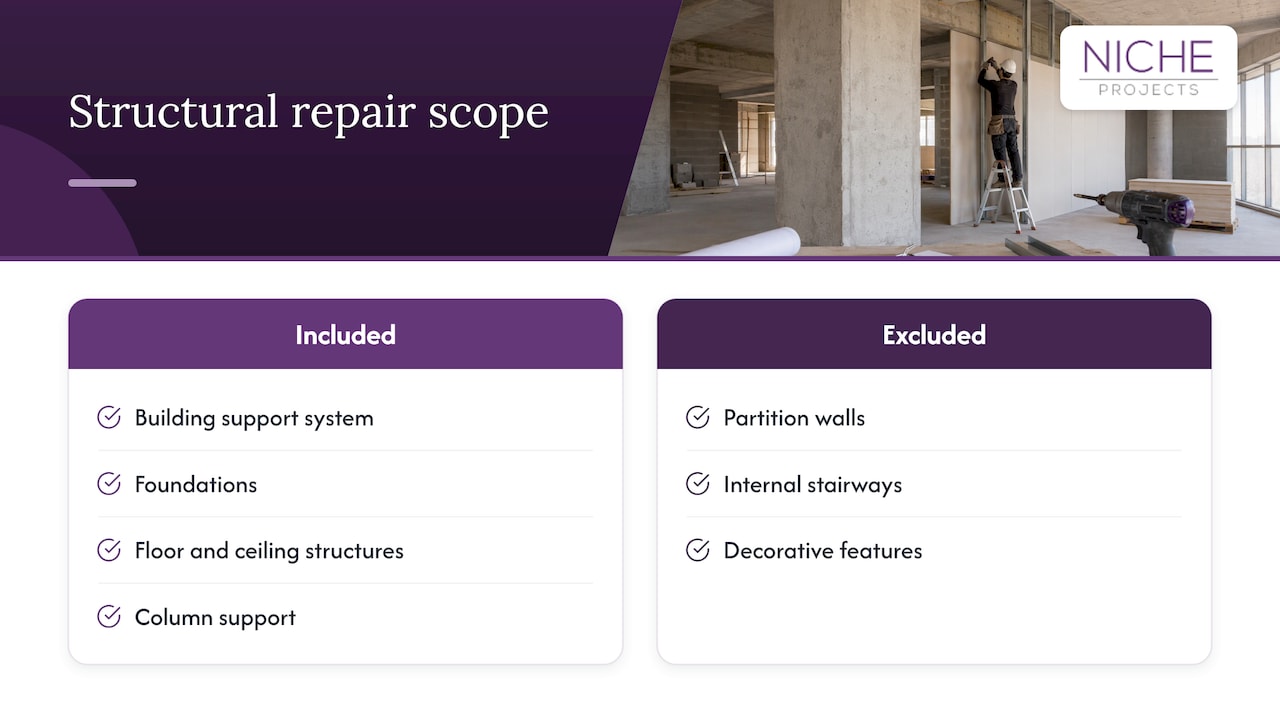
A tenant often assumes anything solid is the landlord’s problem. Not so. One commercial leasing guide describes structural repairs as covering the building support system, foundations, floor and ceiling structures, column support, walls and roof, but not partition walls, internal stairways or decorative features. If you rebuild your internal layout, the partitions you add and later remove are yours to look after.
How state rules change the picture
If your premises are a retail tenancy, state legislation can add protections. Most offices are not retail premises, so check the definition in your state with your lawyer. The examples below show how the lessor and tenant boundary is drawn when the rules apply.
New South Wales
The NSW Small Business Commissioner’s retail guide says a lease should state who is responsible for the cost of installing fixtures and fittings, who repairs and maintains the premises and equipment, and any make-good provisions. Tenants usually pay fit-out costs and may also pay some or all of the landlord’s costs of preparing the premises, with the maximum agreed in writing before the lease begins. That cap is the single most useful number to have in writing.
Victoria
Under the Victorian Retail Leases Act 2003, enabling works such as electrical reticulation, sprinklers, air-conditioning ducts and cabling must be carried out by a suitably skilled person engaged or approved by the landlord, with the maximum cost agreed in writing before works begin. The same Act says that where rent starts on possession and the landlord has fit-out obligations, the tenant is not liable for rent or outgoings before the landlord has substantially complied with them. In other words, late lessor works should not cost you rent.
Queensland
Queensland’s Property Law Act 2023 put standard terms into every lease from 1 August 2025. The Queensland Small Business Commissioner explains that section 142 formalises consent requests for alterations and works, bars unreasonable refusal and requires a decision within one month of receiving all necessary details. If you plan a fit-out in Queensland, that timeline belongs in your program.
The Act’s Schedule 1 also sets the default for condition. The lessee must keep the premises, including approved lessee improvements, in good condition and surrender them in at least the same repair and condition as at the start, subject to reasonable wear and tear and insured damage. Because lease terms can replace these defaults, read your own document, not just the legislation.
Other states and territories have their own rules. If your tenancy is outside these three, ask your lawyer which regime applies before you rely on any of the above.
Lessor works in practice: where projects slip
When a landlord agrees to deliver works, the tenant’s fit-out schedule depends on them. Three issues come up again and again.
1. A vague scope. “Base building works to be completed” means different things to different people. A lease or Agreement for Lease should say what is being delivered (for example, ceiling grid, floor condition, services capacity at the tenancy boundary), to what standard, and by when. Sprintlaw’s October 2025 fit-out checklist suggests tenants lock in landlord approvals, a detailed fit-out program and incentives through an Agreement for Lease, rather than hoping the detail is sorted after signing.
2. Handover condition. The Heads of Agreement glossary notes that the condition of the premises at handover is typically confirmed by a formal condition report before occupation. Treat that report as a working document. Photograph everything and date it. Law firm Hunt & Hunt has recommended that both parties arrange a photographed condition report at lease commencement and after any tenant or landlord fit-out, which gives you a baseline when the lease ends.
3. Disruption from landlord works during your term. Every lease carries an express or implied right to quiet enjoyment, meaning you can use the premises without interference. Bartier Perks notes that landlord building works must be clearly authorised in the lease, and while minor disruption such as noise or dust is not a breach, significant disruption can entitle a tenant to remedies such as damages or a negotiated rent-free period. Before signing, ask whether any landlord works are planned, whether the lease limits disruption, and what notice you get.
If the landlord is also offering a contribution towards your fit-out, the paperwork is different again. Our guide to landlord fitout contributions, GST and site checks covers how those payments are treated.
Tenant works in practice: approvals, cost and control
Tenant works begin with permission. A lease will normally require the landlord’s written consent to alterations, and the building will have its own rules for contractors: working hours, insurance, loading dock bookings and approved trades. Those rules are rarely in the lease itself, so ask for the building’s fit-out guide before you commit to a layout or a program.
Sprintlaw’s checklist says to look for lease clauses covering:
- Approval process: what drawings and specifications are needed, and who signs off fire, structural or services changes.
- Compliance standards: the National Construction Code, building rules, fire egress and acoustics.
- Supervision and access: work hours, inductions, insurances and any base-building contractor requirements.
- Cost responsibility: base-building changes, make-good and landlord works.
- Security: a bond or bank guarantee for works and make-good.
It is far cheaper to negotiate these clauses before signing than to discover them mid-project. Approval paperwork is a discipline in every market, and fit-out approval paperwork shows how much of a fit-out’s critical path can sit with the authority or building owner rather than the builder. Wherever you build, put each party’s works, costs and obligations in writing.
Services capacity is the hidden cost
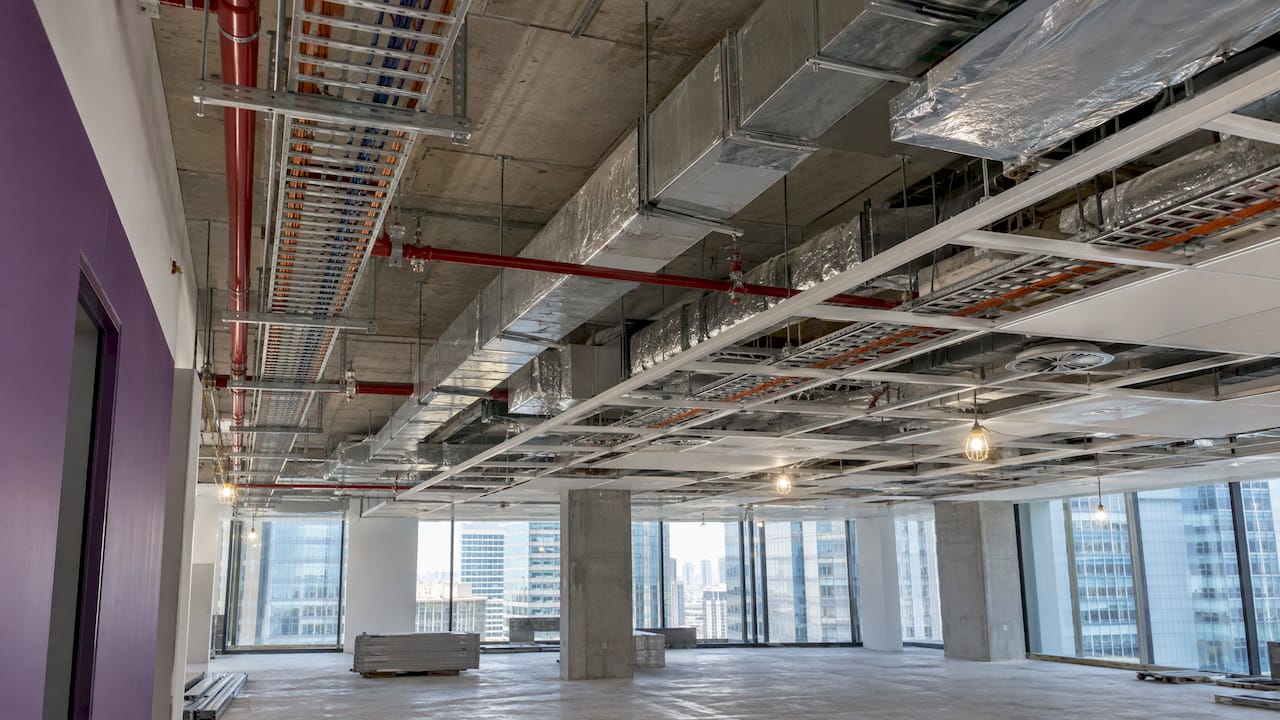
The most expensive surprise in tenant works is often not the finishes but what sits behind them: electrical capacity, air conditioning and fire services. If your layout needs more power or more cooling than the tenancy boundary provides, someone pays for the upgrade, and unless you negotiate otherwise, it is typically you. Ask early what capacity is available at the boundary, and have your designer test the layout against it before it is locked in.
Programming around the lease date
Fit-outs are won or lost on the calendar. If your old lease expires before the new space is ready, you face holding-over costs. If your new rent starts before you can occupy, you pay for an empty floor. Our office fit-out timeline guide walks through scheduling controls that protect your lease date, and our insurance checks before handover cover what the building will expect of your contractor.
Make-good: the bill that arrives at the end
Tenant works create a future obligation. Make-good clauses say what condition the premises must be left in when you go. The NSW Small Business Commissioner explains that make-good provisions typically require the tenant to return the premises in a similar condition to the start of the lease, sometimes stripped back to base-building condition and repainted. It adds that retail leases often provide for an independent quantity surveyor to settle disagreements over cost.
Standards vary with the wording. A Queensland lease guide from Bells Senior describes three common formulations: base-building condition, original condition at commencement per an entry condition report, or simply good repair and condition. The choice changes your end-of-lease bill considerably, and it changes how you should design the fit-out in the first place.
Wording decides the outcome
A 2026 NSW Supreme Court decision reported by Carroll & O’Dea Lawyers shows how much hangs on a few words. In that case a tenant left substantial internal fit-out behind, and the court agreed that a clause requiring the premises to be yielded up in the condition at lease commencement did not oblige removal of the internal fit-out, although the tenant still failed on redecoration. Do not plan around a favourable reading. Get the clause written clearly in the first place.
Design with the exit in mind
Because make-good flows from tenant works, the fit-out is the moment to reduce it. Ask your designer and builder to document what is being installed, which items are landlord-approved and which would need removal. If you intend to remove built-in joinery later, see our notes on removing built-in joinery and fixtures, and read our overview of office make good before you finalise specifications.
In Queensland, the default rules also deal with items you own. Items not removed within one month after the lease ends are taken to be abandoned, and the lessor may remove, sell or dispose of them and recover its losses. Plan removals in your exit timeline.
A pre-signing checklist for the lessor and tenant works split
Use this before you sign a lease or Agreement for Lease, and take it to your lawyer to confirm how it applies in your state.
- List lessor works in a schedule. Scope, standard, completion date and what happens if it is late (rent deferral, extension of a fixed date or a right to terminate).
- Agree the handover condition. A dated, photographed condition report, signed by both sides.
- Get the landlord’s fit-out guide. Working hours, approved contractors, insurance, loading, signage and structural penetration rules.
- Cap landlord-related costs. Where the landlord charges for preparing the premises or reviewing drawings, agree the maximum in writing.
- Confirm services capacity. Electrical, air conditioning and fire services at the tenancy boundary, and who pays if your layout needs more.
- Settle the approval path. Who signs off drawings, how long they have to respond, and whether consent can be unreasonably withheld.
- Define make-good. Base-building, original condition, or good repair, and which items stay.
- Check security. The size and form of any bond or bank guarantee for works and make-good.
- Ask about incentives. A fit-out contribution or a rent-free period. Sprintlaw’s April 2026 article on contributions notes that one paid only after opening for trade may not help if cash flow is tight, and that staged payments may be needed.
- Write down who handles what. Alex Solo at Sprintlaw says the best way to avoid disputes is to make the lease explicit about items such as air conditioning, glass, plumbing, compliance upgrades and make-good.
Worked example: a Sydney office relocation
Imagine a 400 square metre office floor in a Sydney CBD building. The landlord agrees to deliver a stripped base-building floor with new ceiling grid and refreshed common areas. Those are lessor works. Your fit-out (meeting rooms, workstations, breakout kitchen, data and floor finishes) is tenant works.
Here is where the split bites. The landlord’s works finish three weeks after the date in the Heads of Agreement. Your builder was booked for that start date, and your old lease ends in six weeks. If the lease contains a clear completion date and a remedy, you have a basis to claim rent deferral or an extension. If it says only that works will be completed “as soon as practicable”, you have very little.
The same project at the other end: if the lease requires you to return the floor to base-building condition, every partition, ceiling modification and data outlet you install carries a removal cost. If it requires only the condition at commencement, and the entry condition report shows a stripped floor, you may face similar costs. Neither is wrong. Both should be priced into your decision before you sign, because the design and the exit bill come from the same choices.
Where the fit-out team fits in
Workplace strategy, design and construction sit on the tenant side of this line, and they work best when involved before the lease is final. We offer workplace strategy to define what the space has to do, and Sydney office design and Sydney office fitout and refurbishment to deliver it, combining creative design with construction expertise under one team. Bringing us in at the Heads of Agreement stage means the scope of lessor works, the services you need and the finishes you want are tested against a real layout before they are fixed in a lease.
If your premises also need ongoing repairs and upkeep within your side of the split, our facility maintenance services cover trades such as partitions, ceilings, floor finishes, mechanical and fire services, painting and waterproofing.
FAQ
What is the difference between lessor works and landlord works?
Nothing. Lessor and landlord mean the same party, so the terms are used interchangeably. Some leases and agreements say “Lessor Works”, others “Landlord’s Works”, and both describe work the landlord carries out at its own cost, usually before the lease starts.
Who pays for a tenant fit-out in Australia?
Usually the tenant. The NSW retail guide says tenants usually pay fit-out costs and may also contribute to the landlord’s costs of preparing the premises, with a maximum agreed in writing. A landlord may offer a contribution or rent-free period as an incentive, but that is a negotiated term, not a default.
Can a landlord refuse permission for tenant works?
It depends on the lease and the state. Leases normally require consent, and landlords can set conditions. In Queensland, the Property Law Act 2023 bars landlords from unreasonably withholding consent to building works and requires a decision within one month of receiving all necessary details. Elsewhere, read your lease and ask your lawyer.
Do I have to remove my fit-out at the end of the lease?
Only if the make-good clause says so. Some leases require return to base-building condition, others to the condition at commencement. The wording matters, as a 2026 NSW Supreme Court case showed. Settle the clause before signing and keep your condition report.
What happens if the landlord’s works are late?
The lease decides. In Victorian retail leases, a tenant is not liable for rent or outgoings before the landlord has substantially complied with its fit-out obligations where rent starts on possession. For other leases, negotiate a completion date and a remedy such as rent deferral.
Sources
- Glossary of Terms – Heads of Agreement | Caden
- Repairs and maintenance | Queensland Small Business Commissioner
- Commercial Lease Maintenance: Landlord vs Tenant | LawBase
- NSW Retail Tenancy Guide 2022 | NSW Small Business Commissioner
- Retail Leases Act 2003 (Vic)
- Queensland’s new Property Law Act | Queensland Small Business Commissioner
- Property Law Act 2023 (Qld), Schedule 1 | AustLII
- How to Plan an Office Fit Out | Sprintlaw
- Fitout Contributions in Commercial Leases | Sprintlaw
- Lessor Role in Australian Business Leases | Sprintlaw
- Landlord’s works interfering with your quiet enjoyment? | Bartier Perks
- Understanding the costs of leasing | NSW Small Business Commissioner
- Commercial Lease Essentials: QLD Business Owner Guide 2026 | Bells Senior
- Make good obligations and the meaning of condition of a premises | Carroll & O’Dea Lawyers
- Law Update | Hunt & Hunt
- The Ultimate Guide to Securing a Commercial Fit-out NOC in Dubai | INTEGRA Consulting Services