
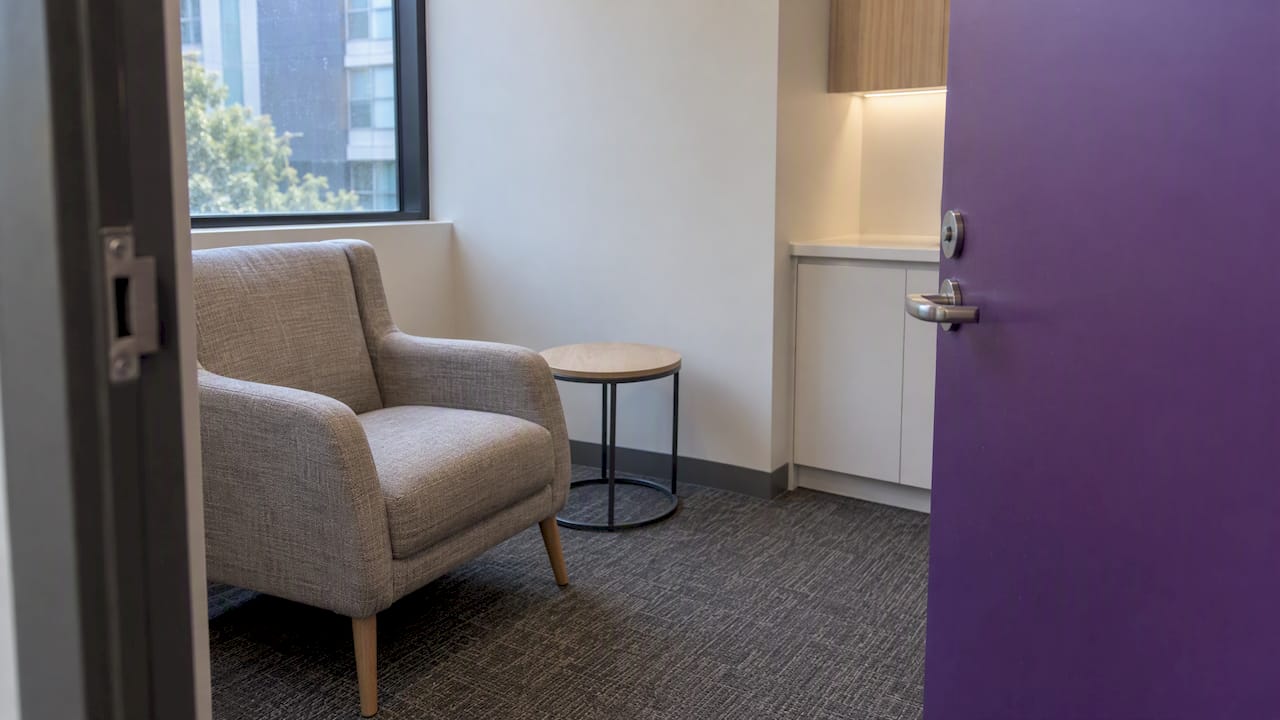
Australia has no single national law that prescribes the size, fittings or layout of a lactation room. What employers do have is a legal duty not to discriminate against breastfeeding employees, and a duty to provide a safe workplace. In practice, that means a private, clean, lockable space, comfortable seating, a table, power, somewhere to store milk and a place to wash hands and equipment, along with the time to use them. This guide explains where the obligations come from, what a good room includes, and how to plan one in an existing office or a fit-out.
TL;DR
- Employees can breastfeed and express at work, and breastfeeding is protected under federal discrimination law.
- The Fair Work Ombudsman says failing to provide adequate facilities or breaks may be discrimination or a breach of work health and safety laws.
- A suitable room is private, clean, signed and free from interruptions, with a comfortable chair, a table, a power point, fridge access and hand-washing facilities.
- A dedicated room is best, but a well-prepared meeting room or spare office can work if it is properly set up and reliably available.
- Plan the room at design stage, and agree arrangements with each returning employee before they come back.
Table of Contents
- What the law expects of Australian employers
- The core requirements for a lactation room
- Time and support matter as much as space
- Can a shared room or meeting room count?
- Planning a lactation room in a fit-out or refurbishment
- Accreditation as a benchmark
- How we can help
- FAQ
- Sources
What the law expects of Australian employers
The starting point is that employees may breastfeed at work. The Fair Work Ombudsman states that employees cannot be discriminated against for breastfeeding, and that not providing adequate facilities or breaks may be discrimination or breach work health and safety laws. It describes best-practice employers as those that provide suitable facilities and appropriate breaks.
The Australian Human Rights Commission’s guide for employers lists breastfeeding as a protected attribute under federal discrimination law. Protection applies to recruitment, as well as to people already on your payroll. State and territory anti-discrimination laws sit alongside the federal Act, so the exact wording differs by jurisdiction. If you operate in several states, check the position in each.
What the law does not do is hand you a floor plan. That is why employers lean on policy documents and accreditation standards for the detail. The most useful are:
- The NSW Government’s Lactation and Work Policy for public agencies, which sets out minimum facility expectations.
- The Australian Breastfeeding Association’s Breastfeeding Friendly Workplace accreditation, which is built around time, space and a supportive culture.
The NSW policy binds public agencies, not private businesses. Still, it is the clearest Australian description of what “suitable” means, and private employers in Sydney can reasonably use it as a benchmark. Treat it as a design reference, and take legal advice or contact your state’s anti-discrimination body if you are unsure about your own obligations.
Mothers’ room or lactation room: does the name matter?
People search for both terms. In practice they describe the same thing: a room where an employee can breastfeed or express milk. “Lactation room” is the more inclusive and accurate label, because the room is for expressing as well as feeding, and because some parents using it are not mothers. The Sex Discrimination Commissioner has reportedly confirmed that the Sex Discrimination Act protects anyone who lactates. A neutral name on the door, such as “Lactation Room” or “Parents’ Room”, avoids awkward assumptions.
A parenting room is a slightly different brief. The Victorian public sector gender equity guidance notes that breastfeeding staff need privacy, time and support, so if you combine the two uses, make sure a baby-friendly setup does not compromise the privacy that a person expressing needs.
The core requirements for a lactation room
The NSW policy gives the most specific Australian description. For public agencies, the space should be private and hygienic, suitably signed, and free from interruptions and the view of other employees. Its minimum requirements may include comfortable seating, a table, power and equipment storage, plus access to a refrigerator and facilities, including hot water, for washing hands and equipment.
Translated into a design checklist:
| Requirement | What it means in the room | Design note |
|---|---|---|
| Privacy | Solid door that locks from inside, no sightlines from corridors or glazing | Frosted film or blinds on any glass |
| Cleanliness | Hard-wearing, wipeable surfaces, good ventilation | Avoid carpet tiles that stain easily near the seating area |
| Signage | Clear sign and a visible “in use” indicator | Works for bookings and for avoiding interruptions |
| Seating | Comfortable chair with back support | Armrests help when holding a baby or a pump |
| Table | Stable surface for a pump, bottles and bags | Sized for a pump kit, not a coffee table |
| Power | At least one power point within reach of the seat | Place it at table height, beside the chair |
| Storage | Somewhere to keep equipment between uses | A lockable cupboard or shelf, if the room is shared |
| Refrigeration | Access to a fridge for milk | In the room, or nearby and not in a busy kitchen if possible |
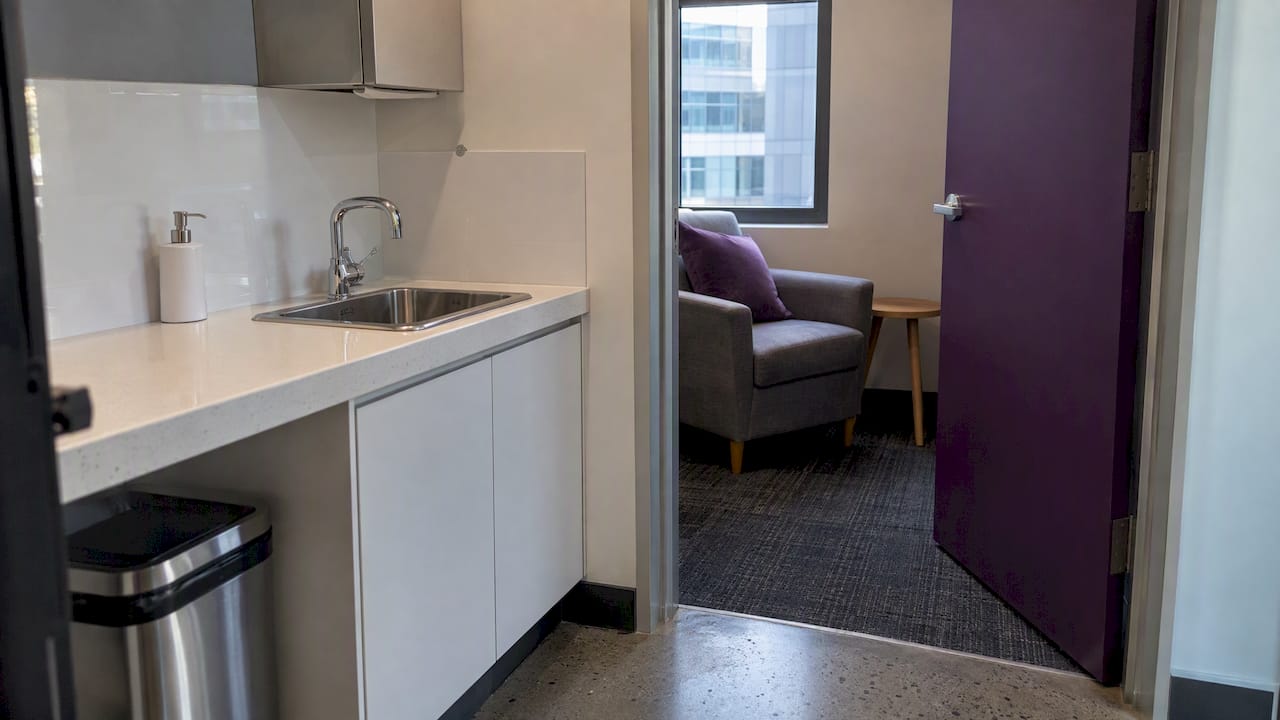
| Washing | Hot water for hands and equipment | A sink in the room, or very close to it |
A policy drawn up for another organisation lists similar items: a private, hygienic, clean and lockable space with power point access, suitable seating near that power point and a table for pumping equipment. Those match what the NSW policy describes, which is reassuring: the standards are broadly consistent across Australian employers.
Privacy is the item people underestimate
Most complaints about workplace lactation rooms come down to interruptions. A room that is technically private but has a door that does not lock, a glass wall onto the open-plan floor, or a sign no one respects does not do its job. Think about:
- Locks you can operate with one hand, with a visible “occupied” indicator outside.
- Sound. Pumps are audible, and conversations from inside carry. Wall construction and door seals matter, and our notes on acoustics and office design cover how to treat a small room properly.
- Sightlines. If the room has a glazed partition, frosted film or a blind solves it.
- Location. Close to the person’s workstation, away from the busiest corridor.
Cleanliness and the washing question
A lactation room is not a bathroom, and nobody should be asked to express in a toilet cubicle. But it does need somewhere to wash hands and rinse equipment. If a sink cannot go inside the room, put the room next to a kitchenette or amenities area so the walk is short. Surfaces should be easy to wipe down, and a small bin and wipes keep the room fit for the next user.
Time and support matter as much as space
A beautiful room that nobody feels able to use is a failure. The ABA’s accreditation standard rests on three elements: reasonable lactation breaks, a suitable private space and a supportive culture. Victoria’s health promotion guidance similarly says services should educate staff to provide support and understanding of breastmilk management, and should have a clear policy that communicates their commitment and outlines practical supports and procedures.
The NSW policy offers a workable model for the conversation between employee and manager. Employees should give reasonable notice of plans to breastfeed or use lactation breaks on returning to work. Managers should support requests as far as possible and explore workable arrangements with the employee. The Australian Breastfeeding Association likewise recommends discussing expressing arrangements with the employer before returning, so the practical details are settled in advance.
A short written policy is worth having. It should cover:
- Where the room is, and how to book or access it.
- How breaks are handled, and who approves them.
- Who to speak to, and a commitment that requests will be treated respectfully.
- What happens if the room is unavailable.
The ABA also stresses that positive duty shifts responsibility away from individual employees having to enforce their rights, and requires employers to actively create safe, respectful and inclusive workplaces. A policy and a ready room are how an employer shows it has done that.
Can a shared room or meeting room count?
Yes, if it is genuinely suitable. The NSW policy says modifications may include converting office space, booking a suitable meeting room or adding blinds to an otherwise suitable room. The ABA adds that parents’ needs are short-term and usually easy to accommodate, including by using a first aid room, prayer room or unused office or meeting room.
That is realistic for small teams. A shared room works when:
- It can be locked from inside and is not overlooked.
- It is bookable and the booking is respected, so the employee is not bumped by a client meeting.
- It has a comfortable chair, a table and a power point.
- Fridge and washing access are close by.
- The person does not have to carry equipment through the whole floor to get there.
First aid rooms deserve a note. They can double as lactation space, but only if the lactation use does not block emergency access. If you have a recurring need, a dedicated room is cleaner than a rota.
When no room is available
If on-site facilities are impractical, the NSW policy says reasonable alternatives should be discussed and agreed, and that flexible arrangements may include working from home. Treat that as a stopgap while a space is created, rather than a permanent answer. A returning employee should not have to choose between their role and their feeding plans because the office was never set up for them.
Planning a lactation room in a fit-out or refurbishment
The cheapest time to get this right is design stage. Adding a locking door, a power point and a basin to an already finished floor costs more than including them in the original plan. If you are planning a move, a refit or a refurbishment, put the lactation room on the brief alongside meeting rooms, wellness spaces and amenities.
When we work with clients on office design in Sydney and office fit-outs, these are the questions we put on the table early:
- Who will use it, and how often? A team of 20 may need one room, used a few times a day. A larger floor may need booking software or more than one room.
- Where does it sit? Close to amenities and plumbing keeps costs down, and reduces the walk for the user.
- Can it do two jobs? A room that serves as a quiet space, prayer room or wellbeing room can work, provided the lactation use has priority when booked. Our guidance on office design and mental health covers why quiet rooms are worth including anyway.
- What services does it need? Power, hot water, ventilation and a lockable door determine the position of the room on the plan.
- How does it fit your wider inclusion approach? A lactation room is one part of an inclusive office design, alongside accessible amenities and flexible spaces.
Building approvals, fire egress and accessibility rules apply to any change in layout or use. Your builder or certifier will confirm what applies to your premises and the work you plan, so raise the lactation room early rather than late.
A simple specification you can hand to a designer
If you want a starting brief, this covers the essentials:
- Dedicated or bookable room with solid door, internal lock and an occupied indicator.
- Comfortable chair with arms and lumbar support.
- Table large enough for a pump and bottles.
- Power point at table height next to the seat.
- Handwashing sink with hot water in or next to the room.
- Fridge access, ideally in the room or a quiet adjacent area.
- Opaque or screened glazing, with blinds or film where needed.
- Good ventilation and wipeable surfaces.
- Clear signage, discreet and inclusive.
- A shelf or locker for storing equipment.
- Optional: a small mirror, a bin, wipes and a noticeboard with relevant support information.
Keeping the room in good order
Rooms fail in operation, not on the drawings. Assign someone, often the office manager, to check that the fridge is clean, the bin is emptied, the sign is working and the booking system is respected. If you run a facility maintenance contract, add the room to the cleaning and inspection schedule. Our facility maintenance team can handle fixes such as doors, partitions, painting and floor finishes in an existing room.
Accreditation as a benchmark
If you want an outside standard to work to, the Australian Breastfeeding Association runs Breastfeeding Friendly Workplace accreditation. Organisations submit documents and surveys that show they meet standards of time, space and supportive culture. Even if you do not apply, the criteria are a useful audit for your own room and policy.
How we can help
We design and build commercial workplaces across Sydney, including refurbishments of existing offices. If you need a lactation room added to your current floor, or you are planning a new fit-out and want it included from the start, we can cover the workplace strategy, the design and the construction in one engagement. Start with our Sydney office fitout and refurbishment service, or talk to us about workplace strategy so the room fits how your people actually work.
FAQ
Is a lactation room legally required in Australia?
No national law prescribes a dedicated room. However, breastfeeding is protected under federal discrimination law, and the Fair Work Ombudsman says failing to provide adequate facilities or breaks may be discrimination or breach work health and safety laws. In practice, most employers should provide a suitable private space and reasonable breaks.
Can an employee use the toilet to express milk?
That is not a suitable arrangement. Australian guidance describes a private, hygienic, clean space free from interruptions, with seating, a table, power and access to a fridge and hand-washing facilities. A toilet cubicle does not provide those.
Can we use a meeting room as a lactation room?
Yes, if it is private, lockable or screened from view, and reliably available. The NSW policy mentions booking a suitable meeting room or adding blinds to an otherwise suitable room. Add a comfortable chair, a table and power, and make sure nobody can book over the employee.
What should a lactation room policy cover?
It should state where the room is, how to access or book it, how breaks are arranged and who to approach. It should also say what happens if the room is unavailable. Victorian guidance recommends a clear policy that communicates commitment and outlines practical supports and procedures.
When should we discuss arrangements with a returning employee?
Before they return. The Australian Breastfeeding Association recommends discussing expressing arrangements with the employer ahead of time so practical details and support are planned. The NSW policy also expects employees to give reasonable notice, and managers to explore workable arrangements.
Sources
- Returning to work from parental leave, Fair Work Ombudsman
- Quick guide to discrimination law, Australian Human Rights Commission
- C2025-10 Lactation and Work Policy, NSW Government
- Creating a breastfeeding friendly environment, Healthy Eating Advisory Service
- Your rights at work when breastfeeding, Australian Breastfeeding Association
- Pumping at work, Australian Breastfeeding Association
- Going back to work: breastfeeding support and resources, Australian Breastfeeding Association
- Breastfeeding Friendly Workplaces, Australian Breastfeeding Association
- Breastfeeding protections extend to biological men, Wisevoter