

The modern workplace is undergoing rapid transformation, with collaboration at the centre of this change. Successful businesses understand that innovation and efficiency thrive in environments where people can share ideas, solve problems together, and feel supported by both their colleagues and their physical surroundings.
Workplace collaboration is not just about teamwork, it is about designing spaces, cultures, and processes that empower individuals to achieve more collectively than they could alone.
At Niche Projects, we create offices that go beyond function, bringing science-backed principles of collaboration into design. By shaping workplaces that encourage interaction and focus, we help businesses unlock their full potential.
Why workplace collaboration matters
The way we work has shifted dramatically in recent years. Hybrid schedules, flexible hours, and digital tools are changing how teams interact. While technology plays a role, the physical office is still the hub where collaboration comes alive.
Strong collaboration in the office leads to measurable benefits:
- Improved problem-solving through diverse perspectives.
- Faster decision-making by reducing barriers to communication.
- Stronger company culture built on shared goals.
- Higher engagement and satisfaction among employees.
Ultimately, workplace design for better collaboration provides a competitive edge. It helps businesses adapt quickly to challenges, attract top talent, and deliver superior outcomes to clients.
The psychology of collaborative working
Behind every instance of effective teamwork lies a psychological foundation. Humans are social creatures, motivated by connection and shared achievement. Collaborative working fosters trust, which strengthens communication and reduces the silos that can hinder productivity.
Studies in organisational psychology highlight three core drivers:
- Belonging
- Purpose
- Autonomy.
People thrive in collaborative environments when they experience belonging, working more effectively as part of a team. A clear sense of purpose aligns everyone towards shared goals and drives motivation. At the same time, autonomy is essential, giving individuals the freedom to contribute their skills and ideas in their own way.
A workplace designed with these principles in mind enables employees to thrive both individually and collectively.

How to design a workplace backed by science
Office spaces shape behaviour. Poorly designed environments can create friction, while thoughtful office design for collaboration actively encourages interaction and innovation.
Open and flexible layouts
Open layouts encourage communication, but balance is crucial. Acoustic panels, partitions, and quiet rooms can reduce distractions while keeping the space adaptable. Flexible furniture and modular zones give employees the ability to reconfigure areas depending on the task at hand.
A carefully planned open and flexible layout also future-proofs the office. As teams grow or projects shift, these adaptable environments can be reconfigured without costly renovations. This agility allows organisations to respond quickly to changes in workload or staffing, ensuring the office continues to serve the needs of the business over time.
Meeting spaces
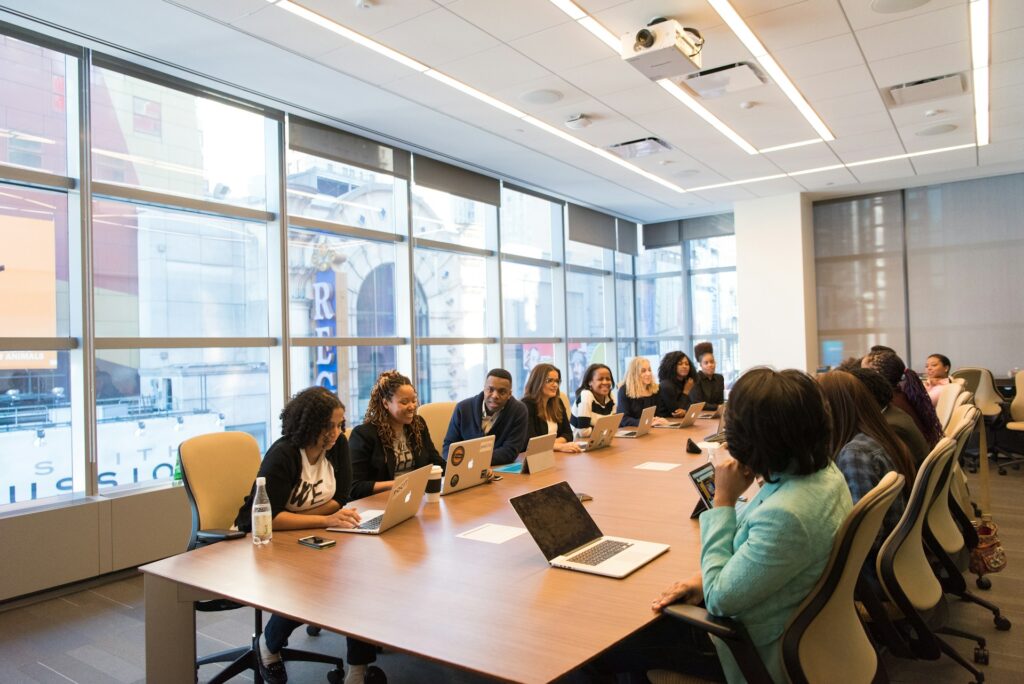
Formal boardrooms are no longer the only places for collaboration. A variety of meeting areas — from small pods for quick catch-ups to tech-enabled conference rooms — support different styles of communication. Integrating digital tools ensures hybrid teams remain connected.
The most effective meeting spaces consider the psychology of collaboration. Comfortable seating, natural light, and good acoustics help people feel at ease, making discussions more productive. Providing a range of environments also caters to different personalities, allowing introverts and extroverts alike to engage in settings that suit them best.
Breakout and social spaces
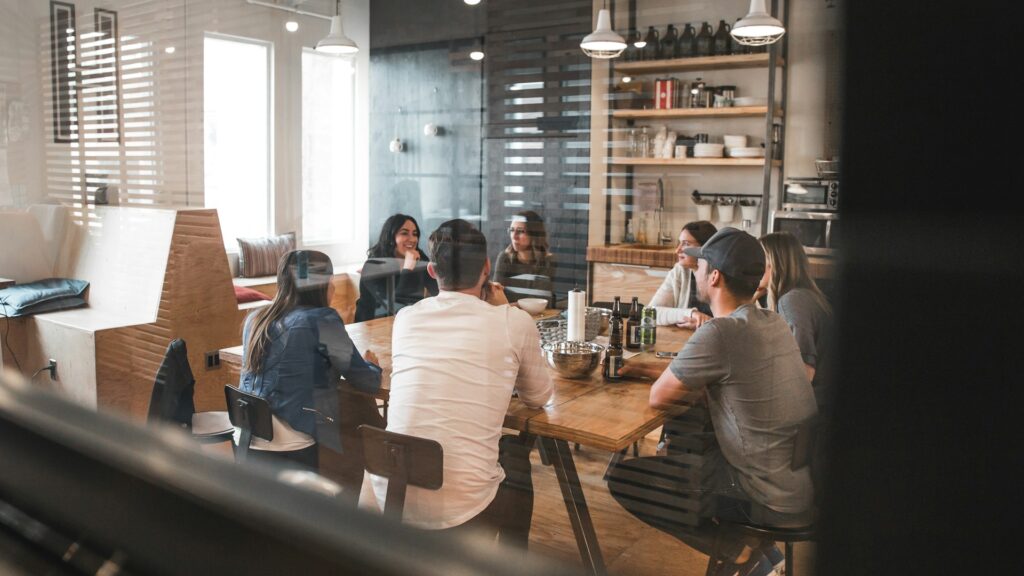
Some of the most valuable ideas come from informal conversations. Kitchens, lounges, and breakout areas encourage spontaneous dialogue and help strengthen relationships. When designed with comfort and accessibility in mind, these areas can be as productive as traditional meeting rooms.
In addition to sparking creativity, social spaces contribute to wellbeing. A well-designed breakout area gives employees a place to pause, recharge, and return to tasks with renewed focus. This balance of work and rest is essential in high-performing teams, where sustained collaboration depends on both productivity and morale.
Technology integration
Modern workplace collaboration depends on seamless technology. High-speed Wi-Fi, secure servers, and video conferencing tools should be integrated unobtrusively into the office. Smart systems can also help manage space efficiently, from booking meeting rooms to adjusting lighting and climate controls.
Technology also acts as a bridge between remote and in-office staff, ensuring collaboration is inclusive and consistent. With the right setup, distance is no barrier to participation. From cloud-based project tools to interactive digital whiteboards, integrated systems enable teams to share ideas instantly and keep projects moving without delay.
Ergonomics and wellbeing
Beyond social and technical considerations, physical comfort plays a vital role. Ergonomic furniture, natural lighting, and biophilic design not only improve health but also create an environment where collaboration feels natural. When employees feel well, they engage more openly and creatively.
Ergonomic design also helps reduce absenteeism and long-term health issues, protecting both staff and the organisation. By investing in adjustable furniture and wellbeing-focused design features, businesses signal that they value their employees. This creates a culture of care and respect, which in turn fosters stronger collaboration and commitment across the workplace.
Overcoming challenges in workplace collaboration
While collaboration brings clear benefits, it also presents challenges. Open spaces may lead to noise and distraction, while some employees may feel less comfortable sharing ideas. Balancing collaboration with privacy is key.
The solution lies in workplace design for better collaboration that incorporates a range of settings. Quiet rooms, soundproof booths, and personal work zones complement collaborative areas, ensuring everyone has a place where they can do their best work. Adaptability is essential, as different teams and industries require different levels of openness and structure.
The role of leadership in driving collaboration in the office
Design sets the stage, but leadership drives the performance. Leaders must model collaborative behaviours, encouraging openness, respect, and knowledge-sharing. Regular feedback, inclusive decision-making, and clear communication reinforce the purpose of collaborative spaces.
When leadership and office design align, collaboration in the office becomes part of everyday culture, not just an occasional initiative.
Book a meeting with a design expert today
Creating a workplace that supports collaboration requires more than surface-level changes. It demands insight into psychology, workflow, and the future of work. At Niche Projects, we combine design expertise with a scientific approach to build offices that inspire.
If you want to explore how workplace collaboration can transform your business, book a meeting with our team today. We will help you design a workspace that reflects your values, supports your people, and drives long-term success.
Book a meeting with our team now.
Key questions and answers about designing a collaborative workplace
What are the five principles of collaboration?
The five principles are trust, communication, inclusion, adaptability, and accountability. Together, these ensure that collaboration is effective, respectful, and results-driven.
How do you measure the success of workplace collaboration in an office?
Metrics can include project turnaround times, employee satisfaction surveys, retention rates, and the number of cross-departmental initiatives. Observation of how frequently teams use collaborative spaces is also valuable.
Can workplace collaboration improve employee retention?
Yes. When employees feel connected to their colleagues and engaged in meaningful work, they are more likely to remain with the organisation. Collaborative environments foster belonging and professional growth, both of which are critical for retention.
What budget considerations should businesses keep in mind when designing for collaboration?
Budgets should cover not only furniture and finishes but also technology, acoustics, and ergonomic solutions. A phased approach may help spread costs, ensuring investment in both aesthetic appeal and functional infrastructure.