
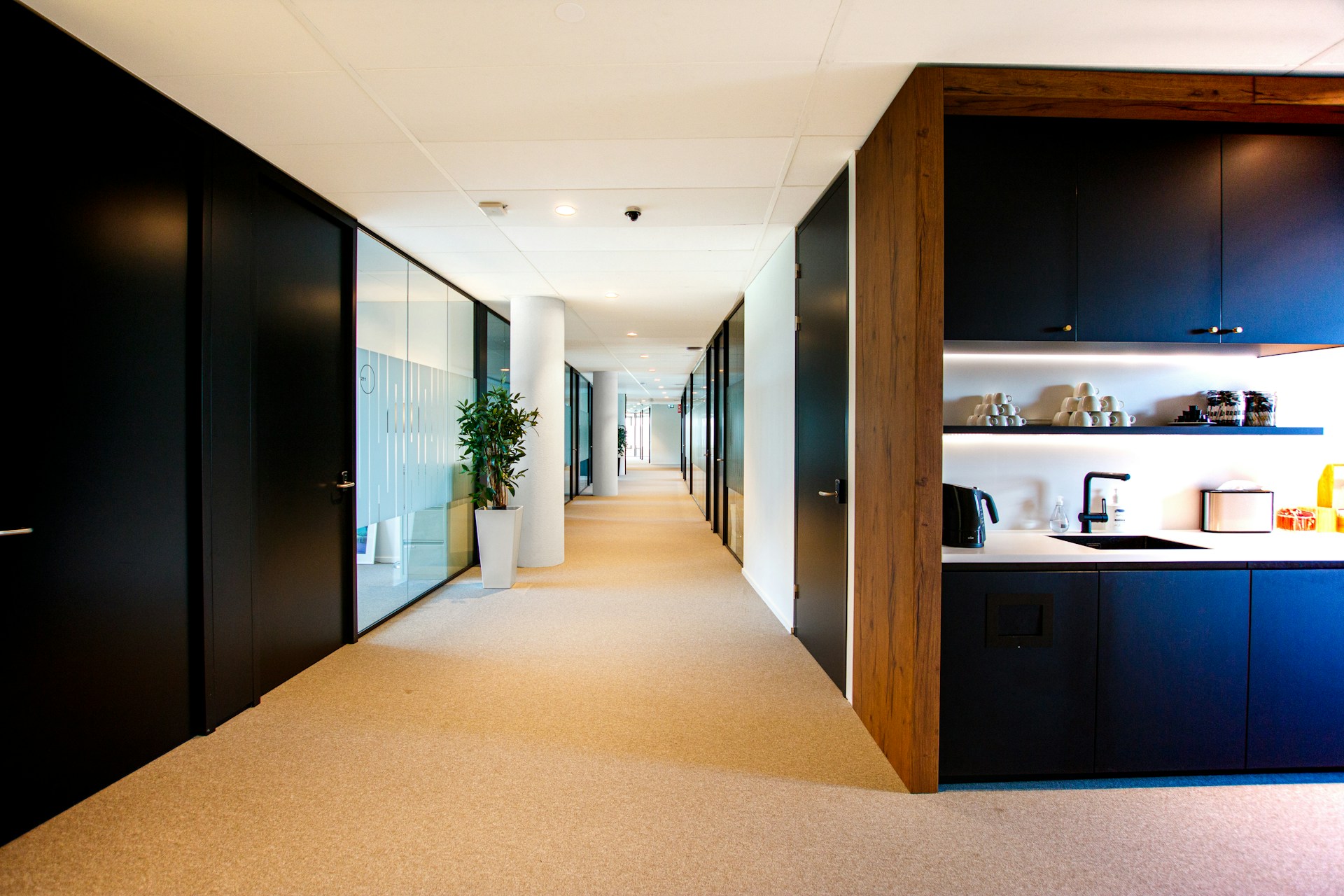
The conversation around offices has shifted from where people work to how workplaces actively support performance, wellbeing and culture.
The most influential workplace design trends in 2026 will reflect this change, focusing on environments that adapt to people, not the other way around. Across Australia and globally, organisations are moving beyond surface-level upgrades and embracing evidence-based workplace strategy.
Understanding these shifts is essential for business leaders, property managers and design teams. Offices now act as tools for collaboration, innovation and identity, and design decisions directly influence how effectively teams operate. The emerging 2026 office design trends reveal a future where flexibility, technology and human experience work together seamlessly.
At Niche Projects, we remain at the forefront of workplace design and strategy in Australia. We always aim to design and craft environments that are conducive to success at a personal and business level.
Book a meeting with our team today.
The rise of strategy-led design
One of the defining workplace design trends in 2026 is the move away from purely aesthetic updates towards deeply strategic environments. Organisations now start with questions about work patterns, team structures and long-term goals before a single material is chosen.
This approach, closely aligned with Australian workplace strategy trends in 2026, ensures that space planning supports real behaviour. Designers analyse how often teams collaborate, the level of focus required and how hybrid schedules affect occupancy. The result is a workplace that flexes with demand, rather than one that feels overbuilt or underused.
For Australian businesses navigating rapid change, this strategy-first mindset creates resilient environments that remain effective as teams and technologies evolve.
Hybrid work, refined
Hybrid working is no longer an experiment, it is embedded in how organisations function. The latest 2026 workplace design trends in Australia show a clear shift towards offices that act as destinations rather than default locations.
Quality fitouts now prioritise activities that benefit from in-person interaction, such as collaboration, mentoring and culture-building. Designers allocate more area to shared zones, project rooms and social spaces, while still maintaining quiet settings for focused tasks.
Crucially, technology integration underpins these workplace design trends in 2026. Seamless video conferencing, digital room booking and integrated collaboration tools ensure that remote and in-office employees have equal access to information and participation. The office becomes a connected hub within a broader work ecosystem.
Wellbeing moves to the forefront
Wellbeing has progressed from a desirable extra to a core design driver. The most forward-thinking 2026 office design trends focus on environments that actively support physical and mental health.
Natural light, improved air quality and access to greenery feature strongly in 2026 workplace design trends in Australia. Biophilic elements, such as indoor planting and natural materials, help reduce stress and improve concentration. At the same time, ergonomic furniture and varied work settings encourage movement throughout the day.
Acoustic comfort is another priority. As offices become more collaborative, managing noise is essential. Designers incorporate acoustic panels, soft finishes and spatial zoning to create balanced soundscapes. These measures, guided by Australian workplace strategy trends in 2026, ensure employees can focus without feeling isolated.
Spaces that adapt in real time
Flexibility now extends beyond movable furniture. One of the most exciting workplace design trends in 2026 is the use of adaptable infrastructure that allows spaces to change function quickly.
Modular partitions, reconfigurable meeting areas and multi-purpose zones enable teams to adjust layouts for workshops, events or focused project work. This approach aligns with the unpredictable nature of modern business and reduces the need for frequent refurbishments.
Data also plays a growing role. Sensors and occupancy analytics inform decisions about space usage, helping organisations refine layouts over time. These insights shape many 2026 workplace design trends in Australia, ensuring design remains responsive rather than static.
A stronger focus on identity and culture
In an era where employees have more choice about where they work, the office must communicate purpose and personality. Among the leading 2026 office design trends is a renewed emphasis on brand expression and storytelling through space.
Designers use colour, materials and spatial features to reflect organisational values. Social hubs, feature staircases and collaborative zones create opportunities for connection and informal exchange. These environments support culture-building, a key theme within Australian workplace strategy trends in 2026.
When employees feel a sense of belonging, engagement rises. Workplace design therefore becomes a strategic tool for attracting and retaining talent, not just a matter of aesthetics.
Sustainability as a standard
Sustainability continues to shape workplace design trends in 2026, with organisations expecting measurable environmental performance. Energy-efficient systems, low-impact materials and responsible sourcing are now standard considerations.
Adaptive reuse and long-life design strategies also feature prominently in 2026 workplace design trends in Australia. Instead of frequent, wasteful refits, businesses are investing in durable solutions that can evolve over time. This approach supports both environmental goals and long-term cost control.
Transparency is increasingly important. Employees and clients want to see genuine commitment, and workplace design provides a visible demonstration of sustainability in action.
Technology that enhances, not dominates
Technology is becoming more intuitive and less intrusive. The most effective 2026 office design trends integrate digital tools in ways that enhance the human experience.
Smart lighting, climate control and room management systems operate quietly in the background, adjusting conditions for comfort and efficiency. Collaboration technologies are seamlessly embedded into furniture and architecture, avoiding clutter and complexity.
This human-centric integration defines many workplace design trends in 2026, ensuring technology supports productivity without overwhelming users.
Is your workplace up to date?
As the role of the office continues to evolve, the most successful organisations will be those that treat design as a strategic asset. The leading workplace design trends in 2026 demonstrate that when space, technology and human experience align, workplaces become powerful drivers of performance, culture and long-term success.
Book a meeting with Niche today.
FAQs about workplace designs in 2026
What are the main workplace design trends in 2026?
The key workplace design trends in 2026 include strategy-led planning, enhanced support for hybrid work, wellbeing-focused environments, flexible spatial design, stronger brand expression and integrated sustainability.
How do 2026 workplace design trends in Australia differ from global trends?
2026 workplace design trends in Australia often emphasise climate-responsive design, strong connections to outdoor environments and a balance between collaboration and focus. These priorities reflect local culture and environmental conditions.
Why are Australian workplace strategy trends in 2026 so important?
Australian workplace strategy trends in 2026 help organisations align their spaces with changing work behaviours. By basing design on data and real usage patterns, businesses create workplaces that remain effective over time.
Are 2026 office design trends suitable for smaller organisations?
Yes. Many 2026 office design trends focus on flexibility and efficiency, which benefit organisations of all sizes. Even compact workplaces can incorporate varied settings, strong technology integration and wellbeing principles.