
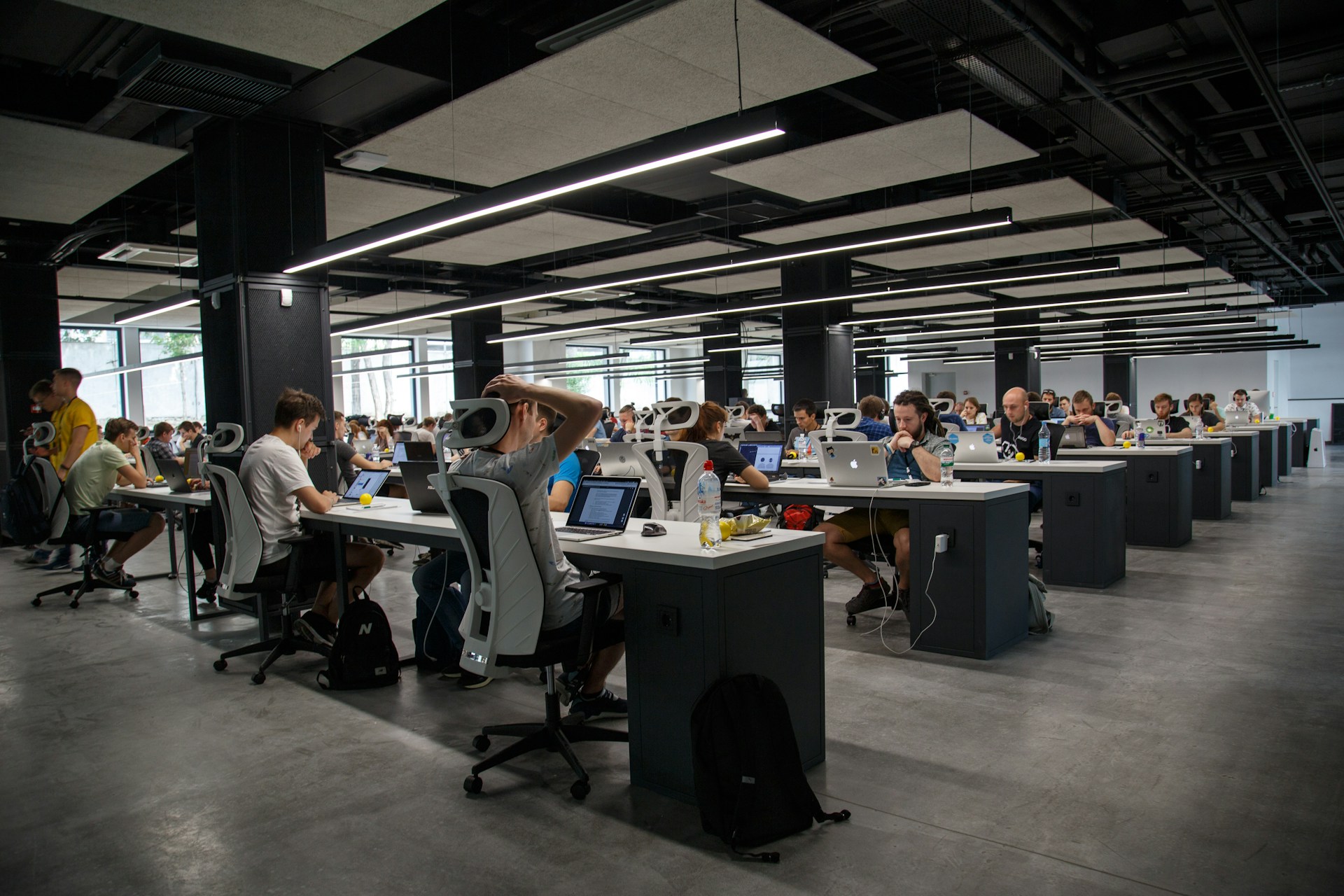
The way we work has always evolved in response to social, cultural and technological changes. For more than half a century, the open plan office has been the default layout for workplaces around the world. But as businesses look ahead, many are asking: what is the future of open plan office design?
Open plan workspaces are entering a new era. They are being reimagined to balance collaboration with privacy, integrate advanced technology and support employee wellbeing. For companies, this means moving beyond a one-size-fits-all approach to create workplaces that are flexible, healthy and future-ready.
At Niche Projects, we design spaces that work. We’re committed to tailoring design and fitout solutions to our clients requirements. Often, that means working with an existing open plan space, which requires a refresh and an update. In this article, you’ll find a number of principles and approaches that we apply to each of these projects for better outcomes.
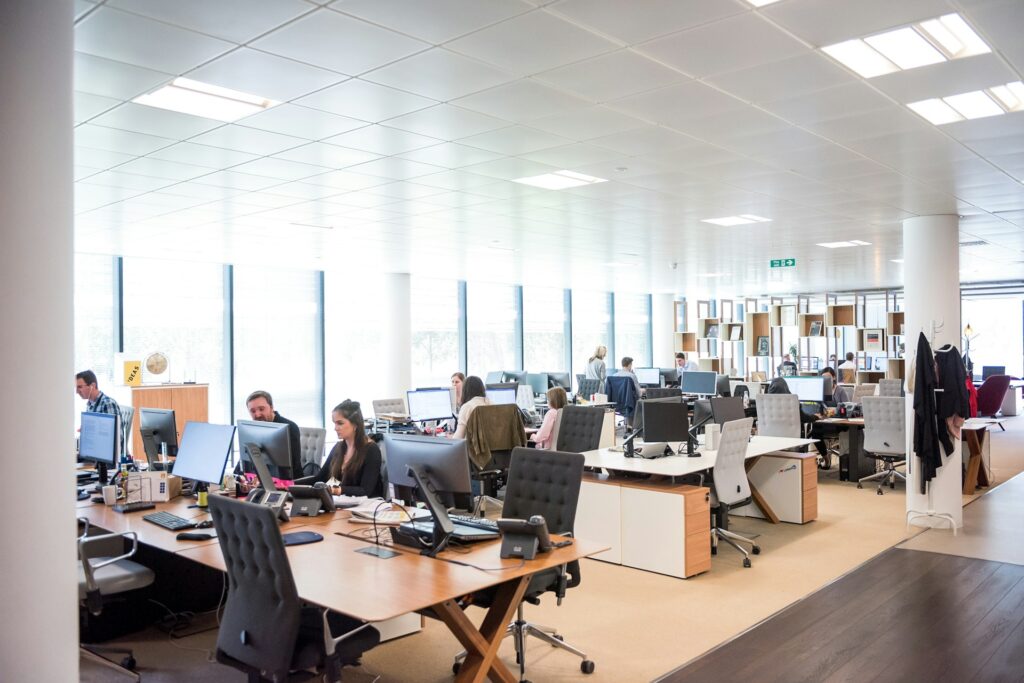
What is meant by open plan office design?
An open plan office is a workspace where employees work in a shared area without permanent internal walls separating desks or departments. The concept gained popularity in the mid-20th century as a way to encourage communication, increase efficiency and reduce the cost of building private offices.
In its simplest form, open plan design means long rows of desks, minimal partitions and a buzzing atmosphere of interaction. While the model has been widely adopted, it has also been criticised for issues such as noise, distractions and lack of privacy. This tension is at the heart of the conversation about the future of open office design.
The shifting workplace landscape
Workplaces no longer exist just to house staff from nine to five. The COVID-19 pandemic normalised remote work and created hybrid models that have fundamentally changed how offices are used. As a result, the role of the office has shifted.
Employees now come into the office for collaboration, culture and social connection rather than routine desk work. This requires a new approach to spatial design, where flexibility and multi-use areas are prioritised. At the same time, companies must respond to rising expectations around sustainability, workplace wellness and inclusivity.
These forces are reshaping the future of office design, where open plan layouts must adapt to new modes of working while retaining their benefits. Finding the perfect space to support your growth into the future is easier than ever with the help of an expert tenant advisor.
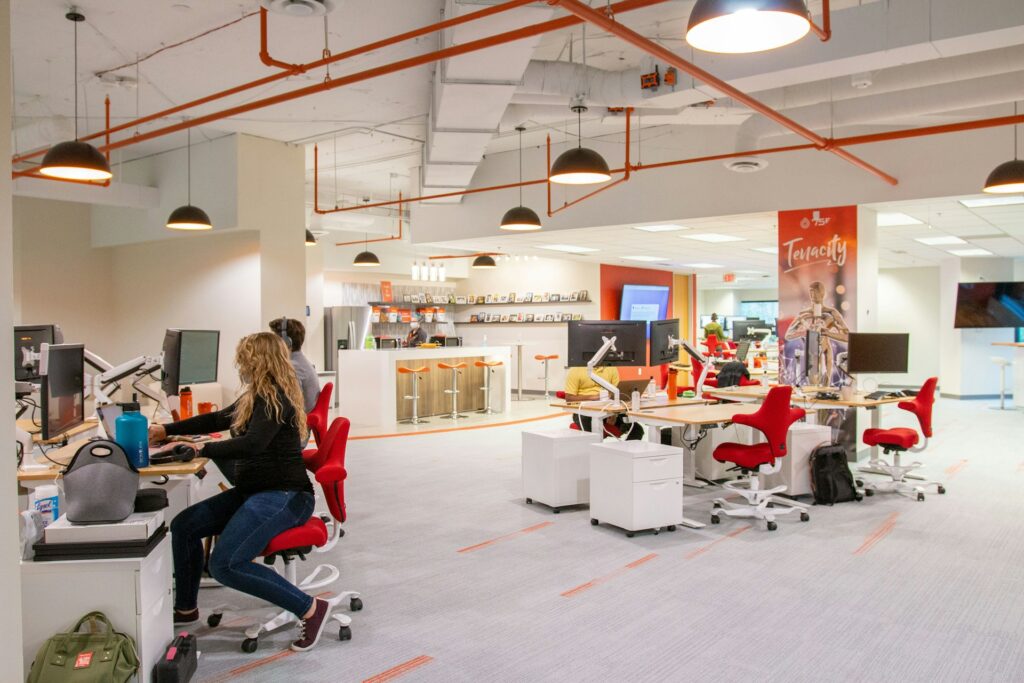
Future trends in open plan office design
The next generation of open plan offices is focused on adaptability, wellbeing and intelligent use of space. Several key trends are emerging.
Balancing collaboration and privacy
Collaboration is one of the strongest benefits of open plan design, but without privacy, productivity can suffer. The future lies in creating “privacy on demand” solutions. This includes:
- Acoustic pods for phone calls and video meetings
- Quiet rooms for focused work
- Moveable partitions that can create smaller zones when needed
- Breakout areas designed for informal discussions.
These features allow businesses to maintain the collaborative spirit of the open plan office while giving staff greater control over how they work.
The role of technology in the future of office design
Technology is central to the future of open plan office design. Offices are now expected to support seamless digital collaboration, both for in-person teams and remote colleagues. Innovations include:
- Smart booking systems for desks and meeting rooms
- Sensors to monitor occupancy and optimise energy use
- Advanced AV systems for hybrid meetings
- Lighting and climate systems that adjust to natural rhythms.
When paired with thoughtful design, technology helps make open offices smarter, more efficient and better aligned with employee needs.
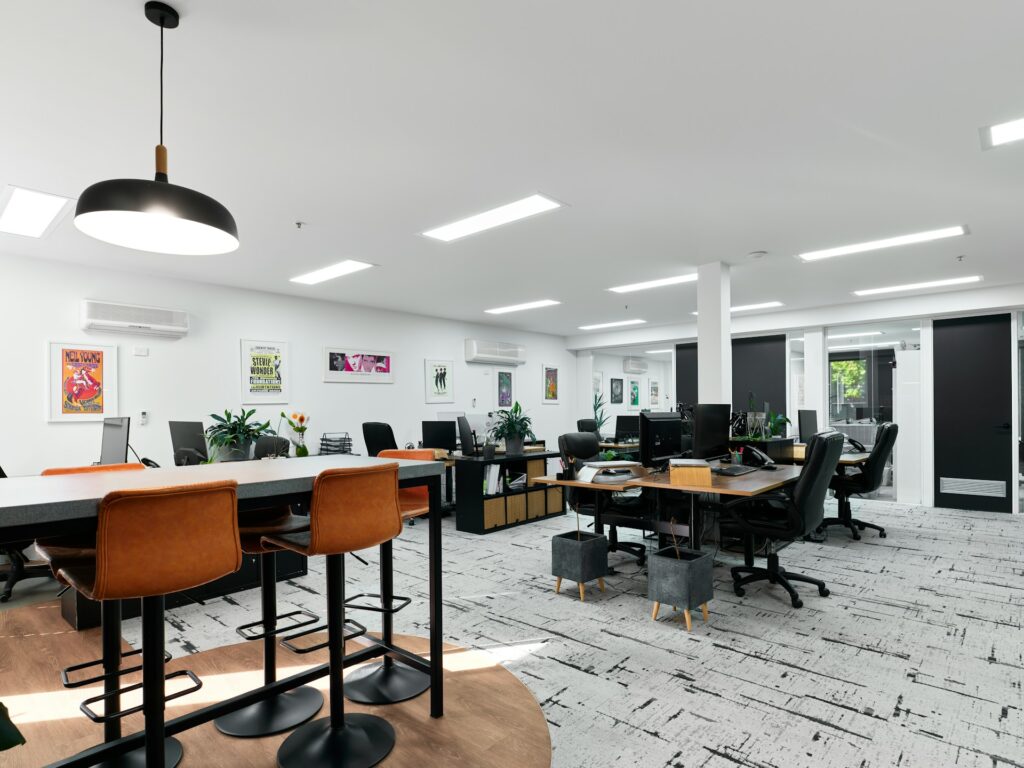
Why businesses are rethinking the future of open plan offices (and what it means)
The traditional open plan office is no longer enough to attract and retain top talent. Workers expect environments that support wellbeing, encourage creativity and respect their need for flexibility.
For businesses, rethinking the open office means:
- Enhancing productivity: by providing the right mix of collaborative and quiet spaces
- Supporting wellbeing: with natural light, greenery and ergonomic furniture
- Building culture: by designing spaces that encourage connection and community
- Preparing for change: with modular layouts that can adapt to new ways of working.
Ultimately, the future of open office design is about giving employees choice. A well-designed workplace shows staff they are valued, which in turn strengthens loyalty and performance.
How Niche Projects can help you shape your future office
At Niche Projects, we specialise in transforming workplaces into healthier, more productive and future-ready environments. Our team is based in Sydney, and we work with businesses across industries to design and deliver innovative office fitouts.
Our approach combines creativity, functionality and a deep understanding of how people work. Whether you need to reimagine your open plan office or design a new space from the ground up, we create tailored solutions that balance collaboration, privacy and technology.
Book a meeting with our team to discuss the future of your workspace.
FAQs about the future of open plan offices
Is open plan office design still relevant in the future?
Yes. While open plan offices have their challenges, they remain highly relevant when combined with flexible layouts, privacy options and smart technology.
What are the alternatives to traditional open plan offices?
Alternatives include activity-based working environments, hybrid models with remote work, and layouts that blend private offices with shared collaborative areas.
How can technology support the future of open plan offices?
Technology enables better collaboration, comfort and efficiency. Examples include digital booking systems, hybrid meeting tools and smart environmental controls.
What role does employee wellbeing play in the future of office design?
Wellbeing is central. Features like biophilic design, natural light, air quality systems and ergonomic furniture help support health and performance.