
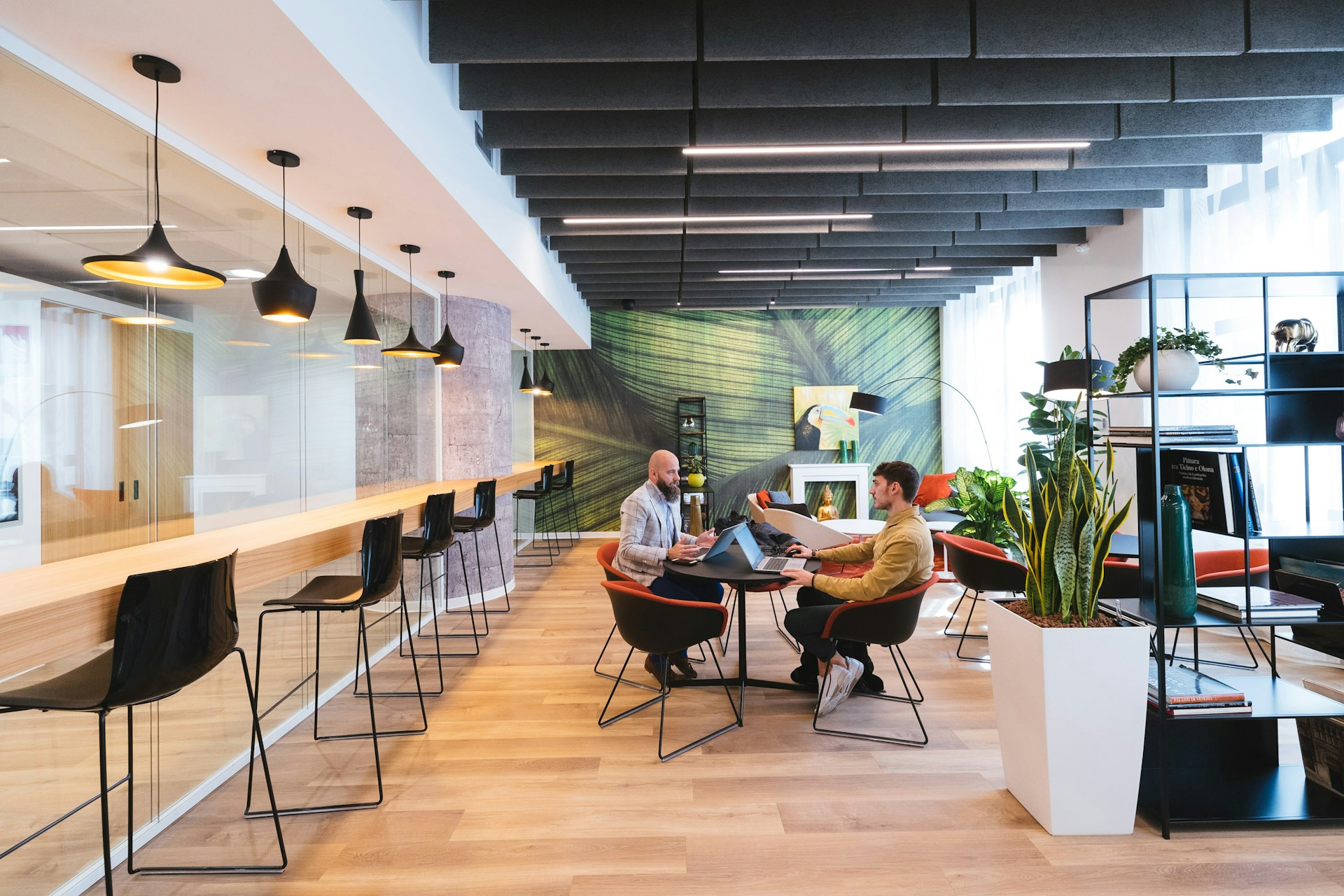
The monumental shift to hybrid work over the past 10 years has changed the way businesses think about office design. Teams now split their time between home and the workplace, creating new challenges for collaboration, communication, and productivity. Getting the best return on investment while fostering a productive space for your people is crucial.
A well-designed hybrid office ensures that employees can work efficiently, interact in a positive manner, and remain engaged, whether they are in the office or connecting remotely. Thoughtful planning and layout are key to making hybrid work successful for both people and the organisation.
At Niche Projects, we’ve worked with a wide range of businesses, helping ensure that their space is fully geared for hybrid requirements. The needs of employees are at the top of this list, because if their needs are met, they’re happier, more productive, and more inclined to collaborate with their colleagues.
Book a meeting with our team today to discuss your ideal hybrid space.
What is a hybrid office?
A hybrid office is a workplace designed to support a mix of in-office and remote work. It balances both flexibility and functionality, enabling employees to work effectively regardless of location or approach to work. This study by Stanford found that hybrid work was a win-win, benefiting both employees and employers.
The flexible, hybrid working model encourages collaboration during in-office days while maintaining productivity for those working remotely. Hybrid offices require thoughtful design to ensure that teams can interact seamlessly, share ideas, and remain connected, no matter where they are working from.
Challenges of hybrid workspaces
Hybrid workspaces introduce several design and operational challenges.
Teams can struggle to maintain cohesion when members rotate between home and office. Communication may be less effective, leading to delays or misunderstandings. Office spaces can also be underutilised, with some areas overcrowded and others left empty. Without strategic planning, hybrid workplaces risk inefficiency, disengagement, and reduced overall productivity.
Design principles for hybrid offices
Effective hybrid offices rely on adaptable, flexible design. Spaces should be modular, allowing for quick reconfiguration to accommodate different team sizes or meeting types. Technology-enabled meeting rooms, video conferencing solutions, and collaborative hubs are essential to connect in-office and remote staff. Balancing open-plan areas with private, quiet zones ensures employees can focus or collaborate as needed. Additionally, ergonomic design and attention to wellbeing contribute to a more productive and comfortable workplace.
Optimising collaboration in a hybrid office
Collaboration in a hybrid office is maximised by intentional space planning. Collaborative zones should encourage spontaneous interactions, brainstorming sessions, and teamwork. Technology integration, such as smart screens and real-time communication tools, allows remote employees to participate fully in meetings. Scheduling and desk-booking systems can also help teams coordinate in-office presence, ensuring that collaborative spaces are used effectively and consistently.
Enhancing communication through a smart office layout
A smart office layout supports clear communication and efficient workflow. Design features such as open sightlines, centralised meeting areas, and wayfinding cues help teams navigate the space and interact naturally. Communal spaces, like lounges and breakout areas, foster informal discussions that strengthen culture and information sharing. Strategically positioning quiet zones and private meeting rooms ensures that focused work and confidential conversations remain undisturbed.
Measuring success in hybrid office design
The effectiveness of a hybrid office can be evaluated through a combination of quantitative and qualitative metrics. Utilisation rates, booking data, and occupancy levels reveal how well spaces are being used. Employee feedback surveys provide insight into collaboration, communication, and satisfaction. Tracking these indicators over time allows organisations to refine layouts, technology solutions, and processes to better support hybrid working and achieve long-term productivity gains.
Book a consultation with our team to discuss your plan for a hybrid work strategy
Creating a hybrid office that truly optimises collaboration and communication requires careful planning and expert design. At Niche Projects, our team can assess your current workspace, recommend strategies to enhance efficiency, and design a layout that supports both in-office and remote work.