
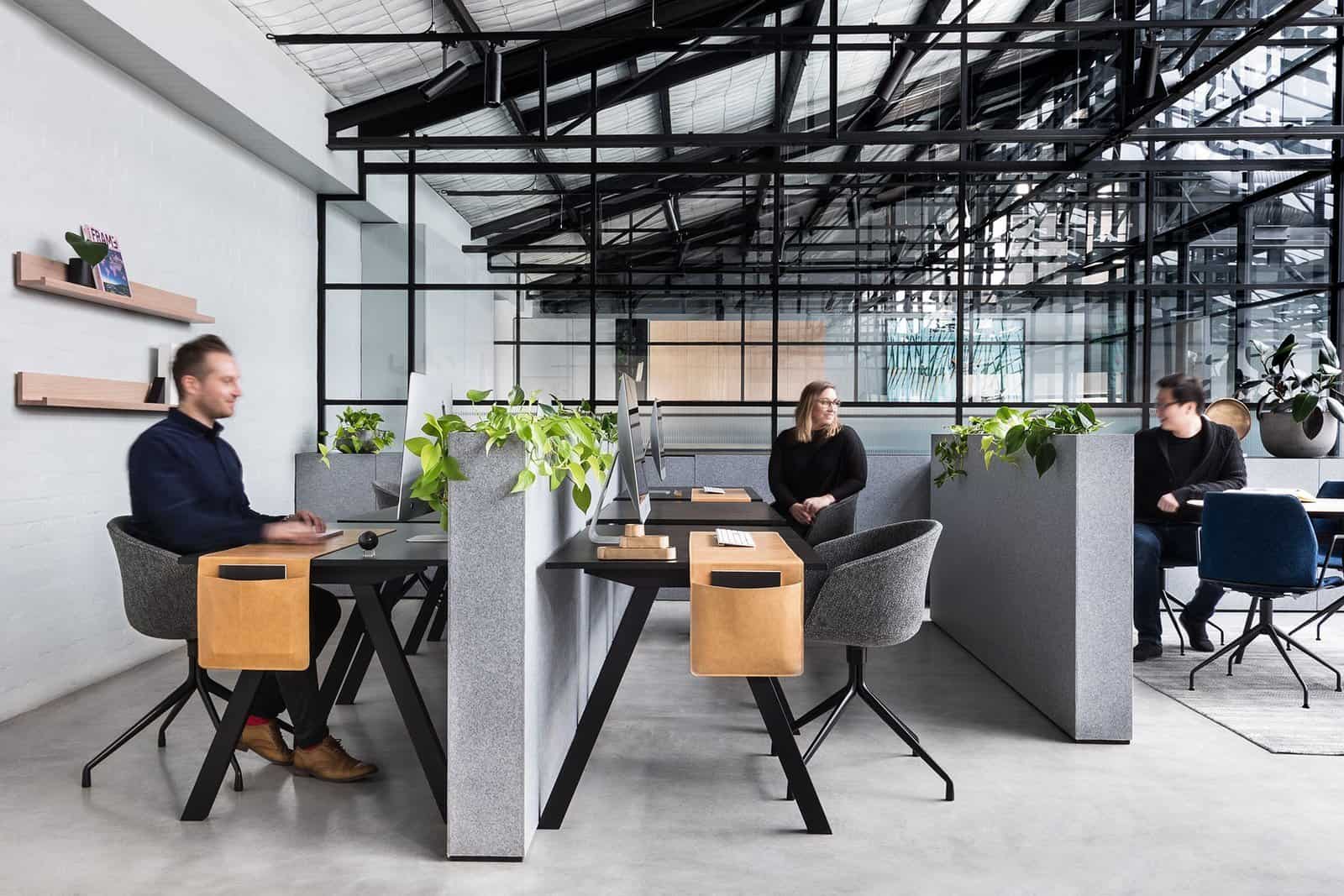
The way we use commercial space is changing fast, all over modern urban centres.
Business models continue to evolve and workplace expectations often shift, meaning organisations are looking towards more flexible, character-rich environments. One of the most compelling trends to emerge from this shift is the rise of warehouse to office fit-outs, a design approach that transforms industrial shells into high-performance workplaces.
For forward-thinking businesses, a warehouse conversion is not simply a property decision. It is a strategic move that can reshape culture, productivity and brand perception. When guided by strong workplace strategy and expert design thinking, these projects can produce some of the most dynamic and future-ready environments available today.
At Niche Projects, we design and build workspaces for office-based organisations in Sydney. Oftentimes, that involves a modern design within an older structure.
Speak to our team about your office today.
Why warehouses are becoming premium office spaces
Warehouses offer something many conventional offices struggle to match: scale, structure and personality. High ceilings, expansive floorplates and robust construction create a blank canvas that allows designers to rethink how work truly happens.
Unlike traditional commercial buildings that often impose rigid layouts, industrial spaces support open planning, flexible zoning and creative spatial layering. This makes them ideal for organisations adopting hybrid models, collaborative workflows and activity-based working.
From a commercial perspective, industrial to commercial fit outs also allow businesses to occupy areas undergoing regeneration. These locations often provide better value, easier access and a distinctive identity, which appeals to both clients and employees. A well-executed warehouse fit out can therefore deliver both financial and cultural returns.
The strategic value of warehouse to office fit-outs
The real power of warehouse to office fit-outs lies in their alignment with modern workplace strategy. These environments naturally support the principles that define high-performing offices today.
First, spatial flexibility. Warehouses typically feature large, uninterrupted spans, which allow teams to create a variety of work settings within one cohesive environment. Focus zones, collaboration hubs, quiet rooms and social areas can coexist without feeling cramped or forced.
Second, wellbeing and comfort. The generous volumes common in a warehouse conversion make it easier to introduce natural light, improved ventilation and biophilic design elements. Designers can incorporate greenery, daylight penetration and varied ceiling heights to enhance both physical and psychological comfort.
Third, brand expression. Industrial architecture, with its exposed steel, concrete and brick, provides a strong visual language. When paired with thoughtful detailing and high-quality finishes, a warehouse fit out can communicate innovation, authenticity and confidence in a way that standard offices rarely achieve.
Key design considerations in a warehouse conversion
Transforming an industrial building into a sophisticated workplace requires more than aesthetic upgrades. Successful warehouse to office fit-outs depend on integrating technical performance with human-centred design.
Structural and services integration is a critical starting point. Warehouses were not originally designed for office occupancy, so mechanical, electrical and hydraulic systems often need substantial upgrades. Introducing efficient HVAC, acoustic treatments and intelligent lighting systems ensures the space performs to commercial standards.
Acoustics also demand close attention. The very features that make industrial spaces attractive, such as high ceilings and hard surfaces, can create noise challenges. Strategic zoning, acoustic panels and soft furnishings help balance openness with comfort.
Circulation and wayfinding are equally important. Large floorplates can become disorienting without clear spatial hierarchy. Designers use visual cues, material changes and architectural features to guide movement and create intuitive navigation throughout the warehouse conversion.
Blending industrial character with commercial performance
One of the defining strengths of industrial to commercial fit outs is the ability to preserve the building’s heritage while elevating it to a contemporary workplace standard.
Exposed structural elements, original brickwork and industrial lighting references can all be retained to maintain authenticity. These features add depth and texture, helping the workplace feel unique rather than generic.
At the same time, modern interventions ensure the environment meets today’s expectations. High-performance glazing, advanced building systems and carefully specified finishes introduce comfort, sustainability and durability. The result is a warehouse fit out that feels both raw and refined, a balance that resonates strongly with modern workforces.
Supporting collaboration, innovation and growth
Workplaces increasingly function as hubs for connection, creativity and shared purpose. Warehouse to office fit-outs naturally support this shift.
Large central zones can be dedicated to collaboration, town halls or social interaction, while perimeter areas accommodate focused work. The vertical volume of a warehouse conversion also allows for mezzanines, feature staircases and multi-level experiences that encourage movement and informal encounters.
These environments send a powerful message to employees and visitors alike. They signal that the organisation values innovation, adaptability and people. Over time, this can help attract talent, strengthen culture and support business growth.
Sustainability and adaptive reuse
Converting existing industrial buildings into offices is also a responsible environmental choice. Adaptive reuse reduces the need for new construction, lowers embodied carbon and extends the life of existing structures.
Through intelligent industrial to commercial fit outs, designers can introduce energy-efficient systems, improved insulation and sustainable materials. This approach aligns operational performance with environmental goals, which is increasingly important for organisations with ESG commitments.
A well-planned warehouse conversion therefore delivers benefits that extend beyond the immediate workplace, contributing to broader urban regeneration and sustainability outcomes.
Expert office design and fit out solutions in Sydney
As businesses continue to redefine the role of the workplace, warehouse to office fit-outs present a compelling, future-focused solution. By uniting industrial character with intelligent workplace strategy, organisations can shape spaces that support wellbeing, productivity and long-term adaptability. With experienced design leadership, a warehouse conversion becomes more than a property upgrade, it becomes a strategic environment that drives cultural change and business performance.
Book a meeting with a design expert in Sydney.
FAQs about warehouse to office conversions in Sydney
What is a warehouse conversion in workplace design?
A warehouse conversion involves transforming an industrial building into a functional office environment. This process upgrades building services, improves comfort and integrates workplace strategy to create a high-performing commercial space.
Are warehouse to office fit-outs suitable for all businesses?
While not every organisation requires this type of environment, many benefit from the flexibility and character these spaces provide. Creative industries, tech firms and growing businesses often find warehouse to office fit-outs particularly effective.
How does a warehouse fit out differ from a standard office fit-out?
A warehouse fit out typically involves more extensive base building upgrades, including services, acoustics and environmental controls. However, it also offers greater design freedom and the opportunity to create distinctive, large-scale workplace experiences.
Do industrial to commercial fit outs support hybrid working?
Yes. The scale and adaptability of these spaces make them ideal for hybrid models. Designers can create a mix of collaborative, social and focused settings within one cohesive environment.