
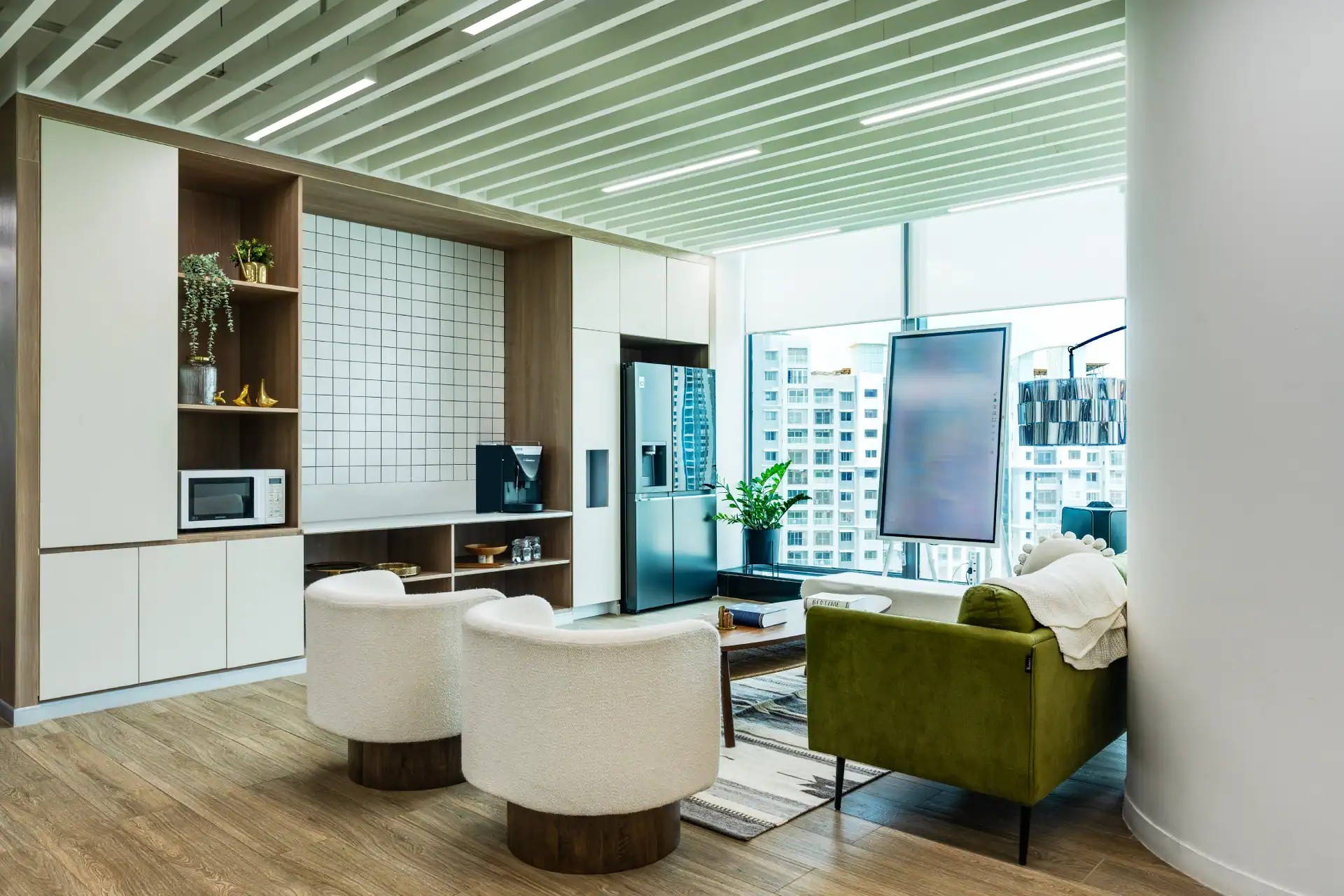
Modern workplaces are louder, faster and more connected than ever before.
While this often brings collaboration and energy, it also creates challenges for employees around focus, productivity, and wellbeing. As a result, the office quiet room has become one of the most essential spaces in every workplace, particularly for those people who thrive in a quieter, calmer working environment.
At Niche Projects, we help businesses rethink traditional layouts to incorporate calming, beautifully considered quiet spaces. Quiet rooms are no longer “nice to have”; they’re becoming essential components of what many call golden office space. These are thoughtfully curated workplaces where people can switch between collaboration and calm with ease.
Book a consultation now to discuss designing the perfect quiet spaces in your office.
Why are quiet spaces so important in an office?
Open-plan layouts have dominated workplace design for more than two decades. While they encourage interaction, research consistently shows that noise and constant visual stimulation can significantly impact concentration, problem-solving ability and overall wellbeing.
This is where the office quiet room truly shines. It provides a controlled environment where staff can step away from interruptions and reset — whether that means completing a high-focus task, handling sensitive calls, or simply decompressing. In a world filled with digital alerts, meetings, and hybrid movement, having a quiet room at work creates a buffer that protects cognitive energy.
More importantly, these calm office spaces are a signal of respect for employees’ time and mental bandwidth. They show that an organisation understands the value of deep work, personal space, and psychological safety.
The benefits of designing a relaxing office space
A well-designed relaxing office space is more than a room with soft seating; it’s a strategic investment in staff wellbeing and business performance. Below, we break down the core advantages organisations gain when they prioritise silence and serenity in workplace design.
Space for calm and better mental health
When people have access to a calming area, cortisol levels drop, focus improves, and stress becomes easier to manage. A dedicated office quiet room gives staff permission to pause, breathe, and mentally reset — something that is increasingly critical in fast-paced industries where burnout is common.
Design plays a major role here. Warm tones, natural materials, indirect lighting, acoustic treatments and ergonomic furniture all contribute to a sense of safety and stillness. When these features are brought together with intention, they transform a standard office into a truly calm office space where people feel supported rather than overwhelmed.
Financial benefits
The financial benefits of quiet spaces are often overlooked. Reduced distraction leads to measurable increases in output, accuracy and efficiency. Teams complete tasks faster, make fewer errors, and require less time to regain focus after interruptions.
From a cost standpoint, employers save on absenteeism, turnover expenses and productivity loss. Incorporating quiet rooms in the workplace also strengthens the overall value of the tenancy itself — making it a stand-out example of well-executed, golden office space that supports long-term commercial growth.
Fostering creativity
Creativity rarely thrives in chaos. Whether an individual is brainstorming, planning a campaign, or solving a complex problem, having a peaceful zone encourages deeper thought and imaginative thinking.
A well-designed office quiet room becomes a space where employees can step back, look at things from a fresh angle and let ideas flow. By providing moments of solitude, businesses empower staff to innovate rather than react — a hallmark of future-focused workplace strategy.
Positive outlook from staff
People feel valued when their environment supports their needs. Quiet rooms show employees that their comfort, focus and wellbeing matter. As a result, morale improves, satisfaction rises, and teams approach their work with more enthusiasm.
This positivity becomes self-reinforcing: happy staff communicate better, collaborate more effectively and create a more cohesive culture overall.
Talent retention
Staff retention is one of the biggest challenges facing modern employers. Competitive salaries and job titles matter, but the day-to-day experience of the workplace matters even more. When employees have access to a quiet room at work, they are better equipped to manage stress, maintain work-life balance and stay engaged. These spaces are one of the best employee retention strategies available.
Quiet spaces are particularly valued by neurodivergent staff, introverted team members and employees in high-pressure roles. By supporting all personality types and working styles, businesses cultivate long-term loyalty.
Creating quiet rooms in the workplace
Designing an effective office quiet room requires more than converting a spare meeting room. It involves intentional planning, best-practice acoustic engineering and a deep understanding of how staff move throughout the workplace. At Niche Projects, we approach quiet-room design as both a science and an art — ensuring every detail contributes to true serenity.
Choosing the right location
Placement is critical. Quiet rooms should be positioned away from high-traffic areas such as kitchens, reception zones or collaborative hubs. Ideally, they occupy a slightly tucked-away corner of the floorplate, creating an immediate sense of separation from the everyday workplace rhythm.
Good sightlines also matter. Staff should feel comfortable entering and exiting the room without feeling observed or judged. Discreet positioning removes barriers to use and ensures the room becomes a natural part of daily workflow.
Designing for comfort, acoustics and usability
An office quiet room must balance physical comfort, acoustic performance and functional design. Core considerations include:
- Acoustic insulation: High-quality wall and ceiling treatments are essential to prevent disruptive noise transfer.
- Soft furnishings: Upholstered seating, carpets and fabric panels contribute to sound absorption while providing comfort.
- Warm lighting: Indirect or dimmable lighting reinforces a sense of calm and reduces cognitive fatigue.
- Technology minimisation: No ringing phones, no meeting screens — the room should feel like a tech-light retreat.
- Clear guidelines: Simple signage or policies help ensure the room is used respectfully and purposefully.
When designed correctly, a quiet room becomes a seamless part of the office ecosystem, supporting staff throughout the workday without imposing strict rules or formality.
Book a meeting with Niche Projects today
A well-crafted office quiet room is one of the most valuable additions you can make to a modern workspace. It enhances wellbeing, boosts productivity and transforms the everyday experience of your team. At Niche Projects, we design quiet spaces that feel sophisticated, intentional and deeply supportive of human performance.