

Value engineering makes a fitout cost-effective without sacrificing the functions the space must deliver, but only when it starts early and runs against clear priorities. The single most important step is to begin value engineering during early design and agree acceptance criteria before anyone touches a specification. Done this way, it protects what the space needs to do while trimming what it does not. We work through exactly this sequence with clients, and it is the difference between a smarter fitout and a cheaper one that causes problems later.
TL;DR:
- Conduct value engineering during early design stages to prevent costly changes during later phases and ensure functions are maintained.
- Focus on function analysis, creative options, structured evaluation, and documented decisions to maximize cost savings without sacrificing performance.
- Implement VE techniques such as material substitution, lighting rationalization, and services coordination early, supported by digital tools like BIM for accurate testing.
- Avoid reactive VE late in projects, as it can lead to rework, contract disputes, and hidden lifecycle costs that negate initial savings.
- Embed VE into project governance with clear roles, formal approval processes, and a comprehensive VE register to protect design intent and control costs.
Table of Contents
- What value engineering is and how it differs from cost-cutting
- When to run value engineering in a fitout: stages and commercial impact
- Practical VE techniques and fitout examples you can use now
- Risks and common mistakes when applying VE (and how to avoid them)
- Embedding VE into project governance: roles, workflow and procurement tips
- How Niche Projects puts value engineering into practice in fitouts
- How Niche Projects can help deliver a value-engineered fitout
- FAQ
- Sources
What value engineering is and how it differs from cost-cutting
Value engineering is a structured, function-based process for improving the ratio of benefit to cost across a project. It asks what a space, system or finish needs to achieve, then tests alternative ways to achieve it for less money or more performance. RICS guidance defines it this way and draws a firm line between VE and indiscriminate cost-cutting, which simply removes spend without checking whether the function survives.
The distinction matters because a cut that looks cheap on day one can cost more across the life of the fitout. Whole-of-life thinking, covering maintenance, replacement cycles and operating cost, is central to genuine VE.
A workable VE process generally includes:
- Function analysis: naming what each element must do, not just what it costs.
- Creative option generation: proposing several ways to deliver that function.
- Structured evaluation: scoring options against cost, durability and risk.
- Documented implementation: recording what was chosen and why.
A 2024 study using Delphi and SWARA methods found that systematic value engineering can reduce overall construction costs substantially, with some projects recording savings commonly cited in the 10 to 30% range, provided stakeholders and trade-offs are properly aligned from the start.
When to run value engineering in a fitout: stages and commercial impact
Timing decides how much value engineering can actually recover. Changes made on paper during concept design cost almost nothing to implement. The same change requested after tender, or worse, during construction, triggers variations, delays and rework that can erase any saving VE was meant to deliver. RICS guidance is explicit that VE’s benefit declines as a project progresses and is most effective in early stages.
Late-stage VE also disrupts procurement. Once materials are ordered and trades are locked into a programme, swapping a finish or a service run means renegotiating contracts and absorbing delay costs that dwarf the original line item.
A practical sequence looks like this:
- Concept and early design: run function analysis on every major system before layouts are locked, using resources like our pre-design checklist to frame priorities early.
- Design development: test two or three options for high-cost elements (ceilings, partitions, services) before documentation is finalised.
- Tender: invite contractor input on buildable alternatives, but treat it as a formal VE register entry, not an ad hoc discount.
- Construction: reserve VE for genuine site discoveries only, with sign-off from the original design intent holder.
Practical VE techniques and fitout examples you can use now
Most fitout savings come from a handful of recurring moves, applied deliberately rather than stumbled into under deadline pressure.
- Material substitution: swap a specified stone benchtop for a high-quality laminate with a matching finish, keeping the visual outcome while cutting material cost and lead time.
- Lighting rationalisation: replace a dense pendant layout with fewer, better-placed fittings paired with task lighting, cutting both fixture count and installation hours.
- Joinery standardisation: repeat a small set of joinery modules across a floor instead of custom-building each one, which also shortens fabrication time.
- Services coordination: route mechanical and electrical services early so ceiling heights and bulkheads are set once, avoiding costly rework later.
- Prefabrication: specify prefabricated partition or pod systems where layouts allow, shifting labour off-site and compressing the programme.
Digital tools help test these trade-offs before they are built. A 2026 study on BIM-driven value engineering found that embedding VE into a BIM execution plan let one project team model multiple options and reported a significant reduction in execution costs in that specific case, illustrating the potential benefits of digital evaluation. That figure reflects a single empirical example rather than a typical outcome, but it illustrates why testing options digitally beats guessing on paper.
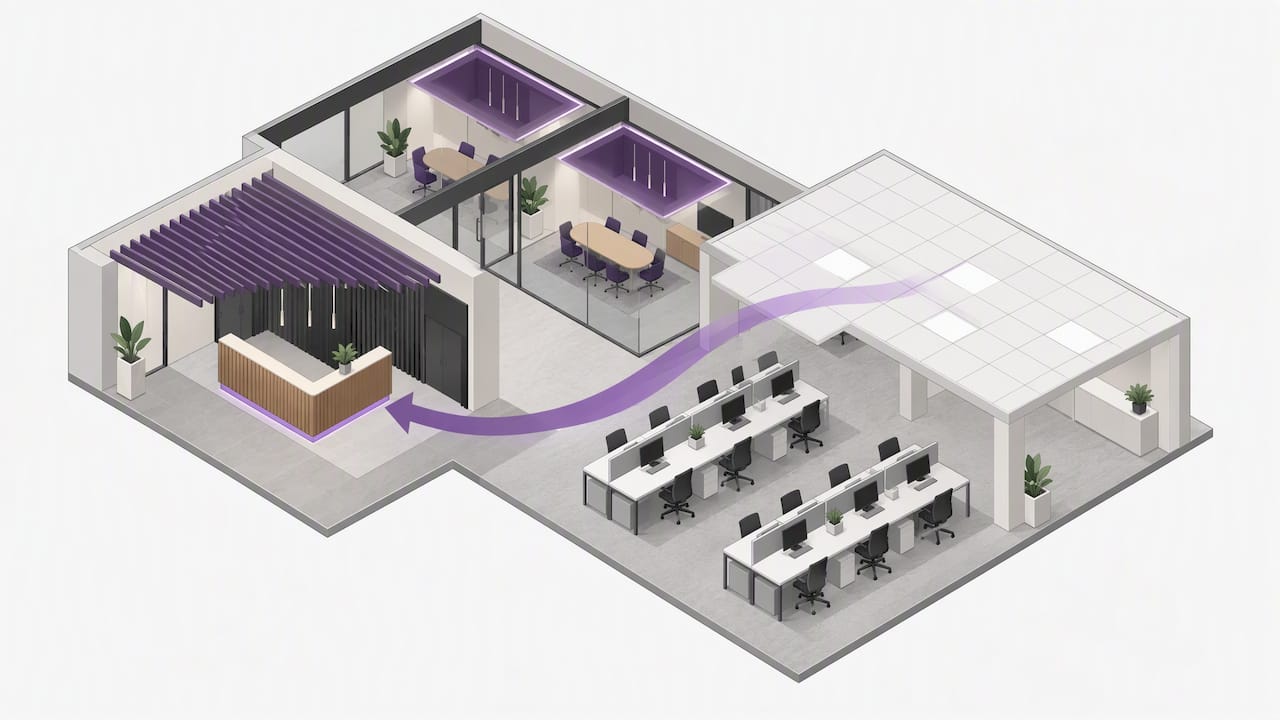
A short example: a client specifies a feature ceiling across an entire floor. Function analysis shows the acoustic and aesthetic benefit only matters in meeting rooms and the reception zone. Reallocating the feature ceiling to those areas and using a standard grid elsewhere keeps the function where it is needed and frees budget for better joinery.
Pro Tip: Run VE workshops with the designer, contractor and quantity surveyor in the same room so trade-offs are evaluated against function and buildability at once, not passed back and forth as separate reviews.
Risks and common mistakes when applying VE (and how to avoid them)
Value engineering goes wrong when it is reactive rather than planned. The most common failure is running it only when a budget blows out, which forces fast decisions with little evaluation and often removes function along with cost.
Other recurring risks include:
- Hidden lifecycle costs: a cheaper finish or system that needs earlier replacement or more maintenance, erasing the upfront saving.
- Compliance gaps: substitutions made without checking fire, acoustic or accessibility requirements, creating rework or certification delays.
- Contract disputes: contractor-proposed savings implemented without a formal change-control process, leaving no record of who approved what.
- Design intent drift: repeated small substitutions that collectively undermine the brief, even though each one seemed minor.
The NCC 2025 Performance Solution process handbook stresses early stakeholder engagement and clearly documented acceptance criteria wherever a performance-based trade-off is proposed. Setting those criteria before VE begins, and keeping a written record of every assumption and approval, is the single best guard against VE sliding into damaging cost-cutting.
Embedding VE into project governance: roles, workflow and procurement tips
Value engineering works best as a scheduled governance activity, not an informal conversation. Clear roles prevent decisions being made by whoever is in the room when a budget problem surfaces.
- Client or owner: sets priorities and approves acceptance criteria upfront.
- Project manager: schedules VE checkpoints at each design gate and tracks outcomes.
- Designer: proposes function-based alternatives and protects design intent.
- Quantity surveyor or value engineer: costs options and models whole-of-life impact.
- Contractor: contributes buildability input, formally logged rather than verbally agreed.
A 2024 study using Delphi and SWARA analysis found that stakeholder management and the time value of money were among the highest-weighted factors in successful VE outcomes, reinforcing why aligning these roles early matters more than the technique itself.
Every proposal should run through a VE register: what was changed, why, what it saves, and who signed off, integrating tools like Google Ads for Builders to optimize promotional efforts based on project outcomes. That register then feeds procurement, so approved substitutions are written into contracts rather than negotiated informally on site. For broader programme and procurement guidance, our piece on managing your office fit out covers how these checkpoints sit alongside the wider build schedule.
How Niche Projects puts value engineering into practice in fitouts
We build value engineering into our process from the first workplace strategy conversation. Function analysis sits alongside the design brief so every proposed saving is tested against what the space actually needs to do.
In practice, that looks like:
- Reviewing ceiling, lighting and partition specifications early to find substitutions that preserve the finished look.
- Coordinating services and joinery design together so ceiling heights and service runs are locked once, not reworked mid-build.
- Keeping a running log of design and cost decisions so clients can see exactly what changed and why.
This approach draws on combining design and construction expertise, which keeps VE discussions grounded in what is actually buildable rather than theoretical. Our guide on why a combined design and fitout approach works covers this in more detail.
How Niche Projects can help deliver a value-engineered fitout
If you are weighing up where cost can flex without losing what the space needs to do, that conversation is easiest early, before a single wall is built. We run workplace strategy engagements that fold value engineering into the design brief from day one, so trade-offs get tested before they become expensive to unwind. For projects already moving toward documentation, our Sydney office fitout team can scope a VE review against your current drawings. Get in touch to book a scoping call.
FAQ
What are examples of value engineering?
Common examples in fitouts include substituting a laminate benchtop for stone while keeping the same visual finish, standardising joinery modules across a floor, and rationalising lighting layouts to cut fixture count without losing task lighting quality. Services coordination and prefabricated partition systems are also frequent VE targets because they reduce both material and labour cost.
What is value engineering in construction?
Value engineering in construction is a structured, function-based process for improving the ratio of benefit to cost across a project, as defined in RICS guidance. It involves analysing what each element must achieve, generating alternative ways to achieve it, and evaluating those options against cost, durability and compliance before implementation.
What is value engineering in simple terms?
In simple terms, value engineering means working out what a space or system actually needs to do, then finding a way to deliver that function for less cost or better performance. It is different from plain cost-cutting because it protects function first and looks at cost second.
What does a value engineer do?
A value engineer leads function analysis, proposes and costs alternative options, and evaluates whole-of-life impact rather than just upfront price. On a fitout, this role often sits with a quantity surveyor or dedicated value engineer working alongside the designer, project manager and contractor through a formal VE register.
Sources
- Deploying value engineering strategies for ameliorating construction project management performance: a Delphi‑SWARA study
- Value management and value engineering (RICS guidance)
- NCC 2025 performance solution process handbook